
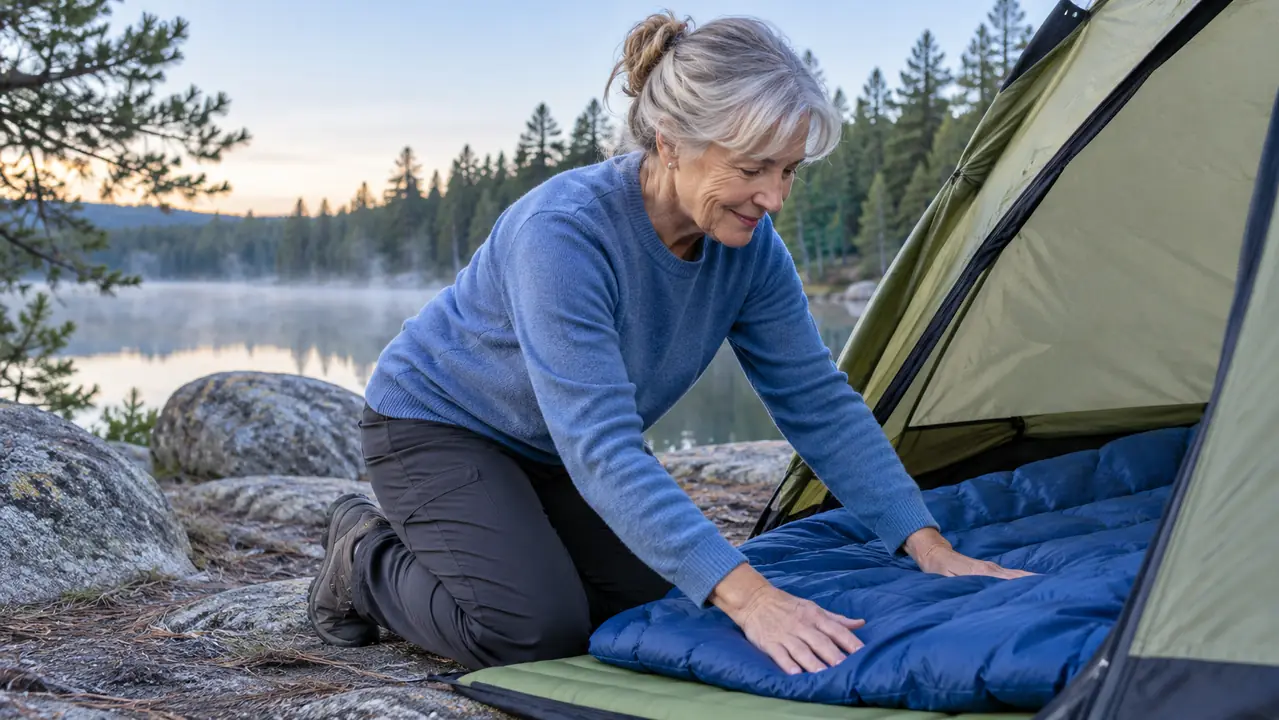
Short answer: for car camping at a Cascade Lakes campground and for two- or three-night trips into the Three Sisters, I take the TETON Sports 20F. It costs a fraction of what a down bag costs, it does not fall apart when the tent floor turns damp, and at 2.9 pounds it is light enough that my stiff left knee stops filing complaints about a mile into the climb. My husband Dale carries a down bag on the same trips, mostly because he sleeps colder than I do and refuses to argue about it, so I have had a fair comparison lying next to me in the tent for three seasons. That is the whole basis for what follows, not a spec sheet.
I am not going to pretend the synthetic bag wins everywhere. If you are counting ounces on a long carry, or you are the person in the tent who is cold when everyone else is fine, down earns its price and then some. The two bags do different jobs well. Below is how they actually split, written from nights I spent in each rather than from what the hangtags promise, including the places where the TETON Sports bag is simply the lesser choice.
| TETON Sports 20F | 20F Down Mummy Bag | |
|---|---|---|
| Fill | Synthetic microfiber insulation in a ripstop polyester shell | Down clusters, usually rated by fill power |
| Listed weight | 2.9 pounds | Typically a pound or more lighter at the same rating |
| Upfront cost | A fraction of the down price | Two to three times more for a comparable rating |
| Warmth when damp | Keeps most of its loft through a wet night and a wet pack-up | Loses loft fast when wet and takes hours to dry |
| Packed size | Compression sack included, still bulky next to down | Packs noticeably smaller for the same warmth |
| Temperature rating | Survival rated to +20F, comfort rated 20 to 30 degrees higher | Comfort usually sits closer to the number on the label |
| Washing | Home machine on cold, ordinary detergent, hang to dry | Front loader, down wash, long low tumble with dryer balls |
| Loft over years | Gradually flattens with heavy use | Holds loft for a decade or more if cared for |
| Room inside | 87 inches long by 32 inches wide, fits up to 7 feet | Mummy cut, usually snugger through the hips and shoulders |
| Best for | Car camping, three-season weekends, wet climates | Long carries in dry, cold country |
Where the TETON Sports 20F Wins
The first advantage is money, and I will not dress it up. A down bag with a comparable temperature rating runs two to three times what the TETON Sports bag runs, and the gap widens once you start reading about fill power. That matters because the bag is not the piece of gear that decides whether your back hurts in the morning. The pad does. When a friend asks me where to put a limited gear budget, I tell them to spend on the pad and the boots and to save on the bag, and a synthetic mummy bag is exactly where that saving lives. Dale spent three times what I did on his bag and we both slept through the same frost.
Second, it does not panic when it gets wet. The shell is a ripstop polyester over microfiber synthetic fill, and that fill keeps most of its loft when it takes on moisture. In the Cascades in June, moisture is not a hypothetical. I have packed up a tent in a rain that started at four in the morning, stuffed a damp bag into the back of the Outback, and slept in it again that night at a lower elevation without any drama. Down in that same scenario becomes a heavy, flat, useless thing that needs hours of sun it is not going to get. I keep a log of sorts, mostly because I taught middle-school science for thirty-one years and cannot help myself. The entry for June 14 two years ago reads: rain at 4:10 a.m., fly soaked through, bag damp across the foot half, wrung the shell out, stuffed it wet, slept in it again that night at Little Cultus. No shivering. The down bag in the same tent hung over a picnic table for the whole next afternoon and still felt thin at bedtime. If you camp where it rains, or you camp with grandchildren who leave the fly open, this is the single biggest argument for the TETON Sports bag and it is not close.
Third is care, and fourth is room. The TETON Sports bag goes into the washing machine at the laundromat in town on cold, comes out, and goes back in the closet. Down wants a front-loading machine, a bottle of down wash, and an afternoon of tumble drying on low with a couple of dryer balls to break the clumps, and skipping any of that shortens the life of an expensive bag. Then there is the cut. Mine is 87 inches long and 32 inches wide, mummy shaped, rated to fit someone up to 7 feet. At five foot four I rattle around in it, which I like, because I can roll onto my side and the bag stays put instead of wrapping my knees together.
Where a Down Bag Wins
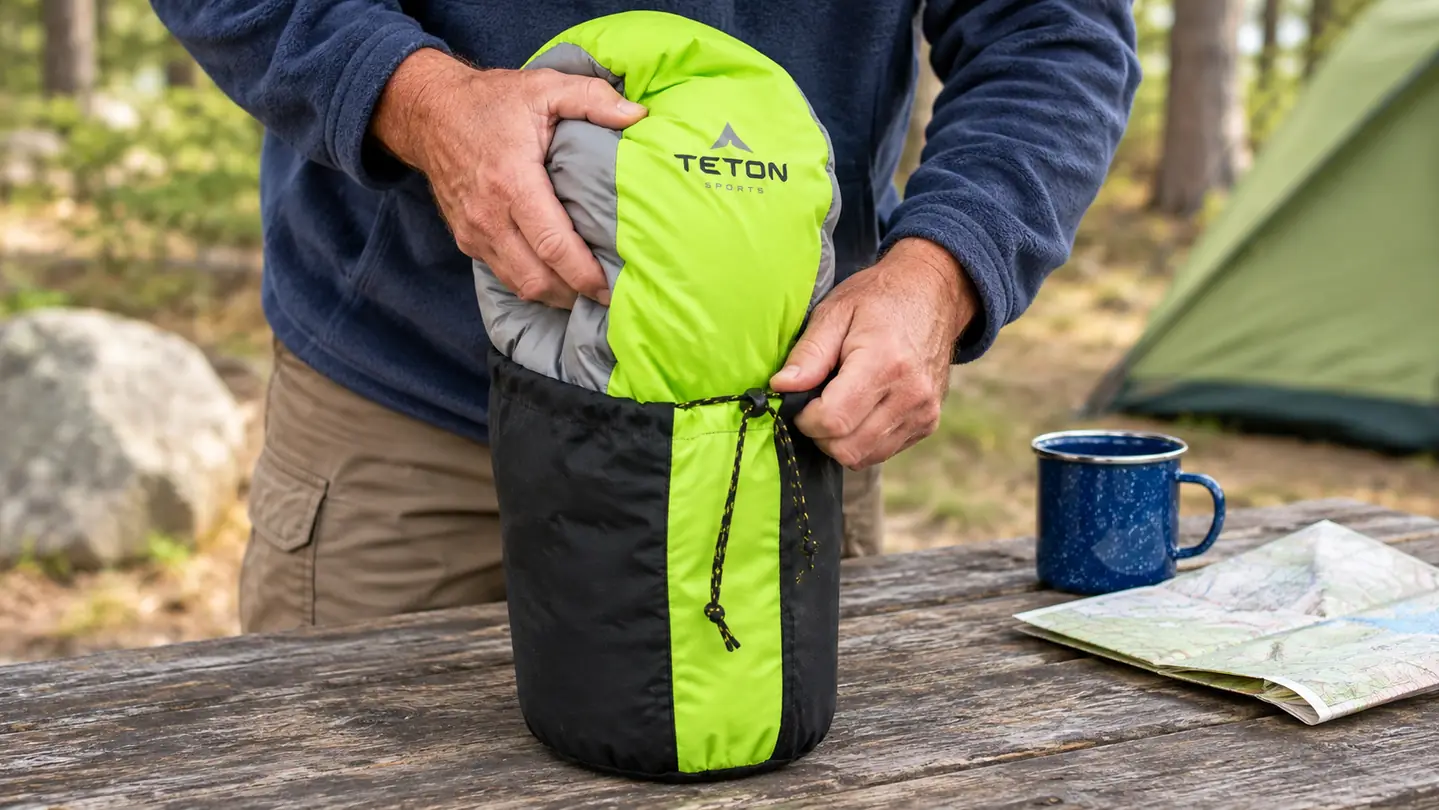
Down wins the carry, and it is not close either. Dale's bag weighs a pound or more less than mine at the same rating, and it packs down to something you can wedge into the bottom of a 40 liter pack without reorganizing your whole load. Mine comes with a compression sack, which helps, and I still plan the pack around the bag instead of the other way around. On a two-night trip where the walk in is four miles and mostly flat, I do not care. Two Septembers ago a friend talked us into the Green Lakes trail instead of our usual flat walk in, and I felt every extra ounce of that bag over the last mile and a half of climbing. Dale, carrying a pound less, was sitting on a log at the top long enough to take a photograph of me arriving. I have not forgotten it. I also have not stopped carrying the synthetic bag, which tells you what I think the trade is worth on the trips I actually take.
Down also has the longer memory and the better warmth for the weight. A down bag that gets washed rarely and stored loose will hold its loft for a decade or more. My TETON Sports bag has flattened noticeably across the chest after three seasons of regular use, and while it still does the job, I can feel the difference on a cold night at Hosmer Lake in late September. Synthetic fill is heavier for the same warmth, and that is just physics, not a marketing flaw. You are trading durability and pack size for price and wet-weather tolerance. That is a fine trade. It is still a trade.
See today's price on the bag I take into the Three Sisters
The TETON Sports 20F: 2.9 pounds, mummy cut with a hood, zipper draft tube and vaulted footbox, compression sack included. Comfort rated well above its survival number, so plan it for three-season nights and not for a February snow camp.
Amazon Check Today's Price on Amazon →The Number on the Label Is Not the Number You Sleep At
Here is the part that trips up more people than anything else in this comparison. The TETON Sports bag carries a survival rating of +20F, and the listing is honest enough to say the comfort rating sits 20 to 30 degrees higher. Read that again, because it changes how you pack. This is a bag for nights that stay above roughly freezing, not a bag for a hard frost with wind behind it. A down bag at the same stated number usually behaves differently, because the down does more work per ounce of fill and the comfort figure tends to land closer to the label.
None of that makes the synthetic bag a bad buy. It makes it a bag you have to match to your season. In the Three Sisters in July and August, the overnight lows sit in the forties and the TETON Sports bag is exactly right, sometimes too warm by two in the morning. On a late September trip I add a fleece, a hat and a warmer pad, and I am still comfortable. In February, I stay home. Take a 38 degree night at Hosmer Lake in late September, the kind where the tent walls are wet by morning. Dale is in his down bag with a light base layer and he is fine. I am in the TETON Sports bag with a fleece, a wool hat and a pad whose rating I actually checked before we left the driveway, and I am also fine. Strip the fleece and the hat out of my setup and that same night goes badly. The gear list is doing as much work as the bag, and it costs nothing to learn that before you are cold.
The +20F on the label is a survival rating. The temperature you actually sleep at is 20 to 30 degrees warmer, and pretending otherwise is how people end up cold and annoyed at a bag that did exactly what it promised.
You can close most of that gap with the pad, which is where I would put the money I saved. A pad with real insulation under you changes a cold night more than twenty extra degrees of bag rating does, and my back prefers it too. Dale and I now carry the same pad, and the only difference between our sleep on a 38 degree night is how much each bag weighs in the morning when we are both packing up in the cold.
What Three Seasons Did to Mine
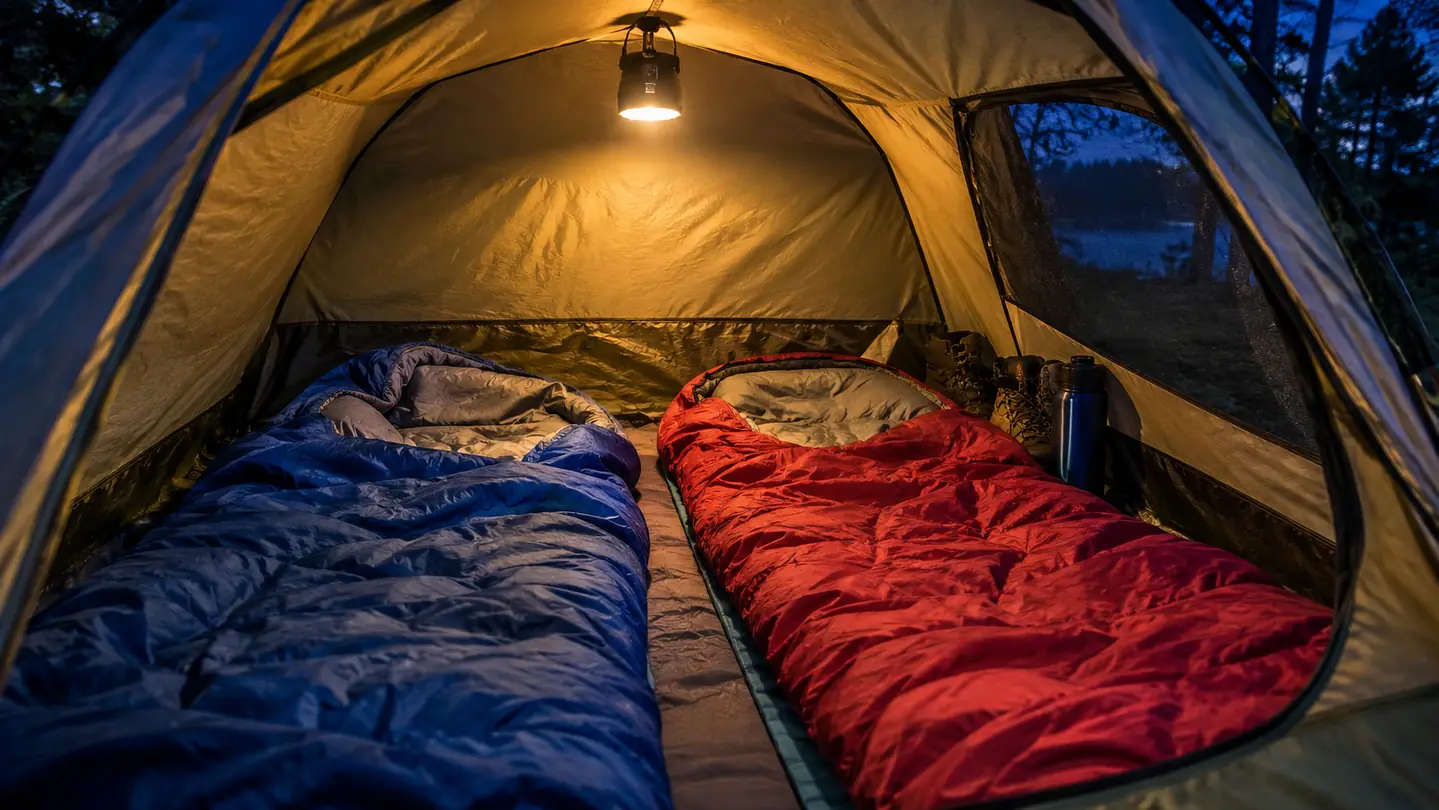
Three seasons of real use. I counted it up on a wet afternoon because that is the kind of thing I do now: forty-one nights since May of the first year, thirty-two of them car camping at places like Cultus Lake and Elk Lake, nine in the backcountry. The zipper has not snagged or separated. The draft tube behind it still does its job, which on a cheaper bag is usually the first thing to fail. The vaulted footbox gives my toes room, and that sounds like a small thing until you have spent a night in a bag that presses your feet flat. The hood cinches down around the face properly. The one wear item is loft: the chest area is thinner than it was, and I now store the bag hanging in the garage rather than stuffed, which has slowed the flattening.
The compression sack that came with it is functional and unremarkable, and I replaced it with a slightly larger one, because I would rather carry a looser bag than fight it into a sack at six in the morning in the rain. That is a small gripe. The bigger one is fit. A tall, broad-shouldered person will find the mummy cut snug through the shoulders even at 32 inches wide, and if that is you, a down bag in a wider cut may simply suit your body better regardless of fill.
Who Should Buy Which
Buy the TETON Sports 20F if you car camp, if your trips run from late spring into early fall, if you camp where it rains, and if you would rather put money into a pad and a decent tent than into fill power. It is also the right first bag for a grandchild or a friend you are introducing to camping, because it forgives being rained on, dragged through a tent door and washed badly. Buy a down bag if you backpack more than you car camp, if you sleep cold, if you head out in shoulder seasons or at altitude, and if you will actually do the washing and loose storage that keeps down alive for fifteen years.
The mistake I see most often is buying down for the wrong reasons, because it sounds like the serious choice, and then treating it badly. The second most common is buying synthetic and expecting it to behave like down on a long cold carry. Match the bag to the trip you actually take, not the trip you imagine taking, and either one will serve you for years. Mine lives in the back of the Outback from May to October, and I have never once regretted it.
The bag that lives in my Outback from May to October
2.9 pounds, mummy cut, hood, zipper draft tube, vaulted footbox and a compression sack in the box. Survival rated to +20F with comfort 20 to 30 degrees higher, so match it to three-season nights and give it a decent pad underneath.
Amazon Check Today's Price on Amazon →