
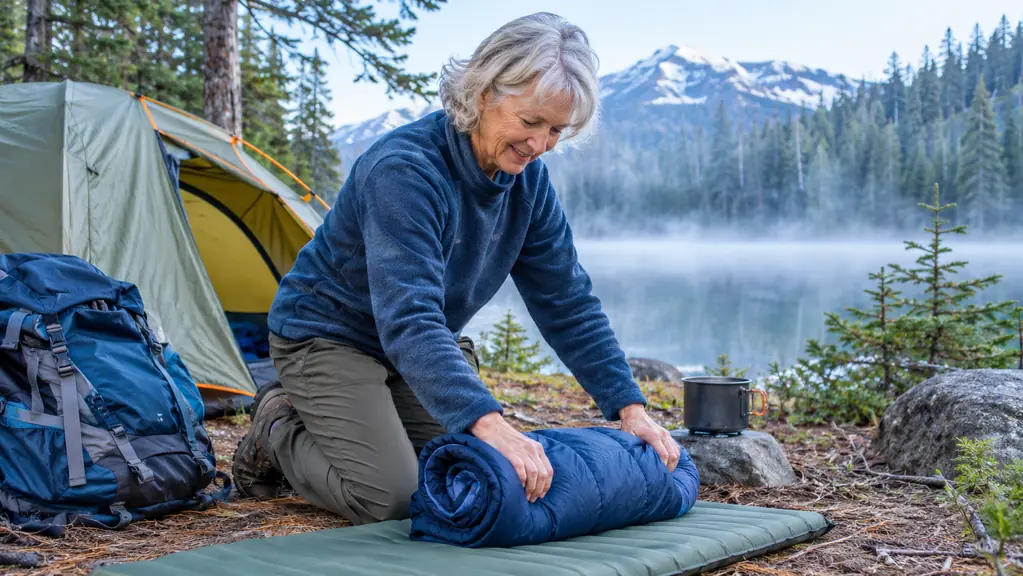
The first sleeping bag I ever carried on my back was down, and it cost more than my first car. I was twenty-two and I babied it. Forty years later I am sixty-one, my left knee has opinions about downhill miles, and the bag in my pack is a synthetic mummy from TETON Sports. That is not a downgrade story. It is a story about what actually keeps you warm at 9,000 feet in September, when the forecast says thirty-four degrees and the tent wall is wet before midnight.
Dale and I do two or three nights in the Three Sisters Wilderness most summers, plus a lot of car camping out of the 2014 Outback at Cascade Lakes. I have slept badly in good bags and well in cheap ones. What I have learned is that TETON Sports builds a synthetic bag that is not the compromise people make it out to be, at least not for the trips most of us actually take. Here are ten reasons, in the order I would argue them at my own kitchen table.
The bag I keep reaching for when the forecast turns
Survival rated to +20F with a comfort range well above that, 2.9 pounds on the scale, and a compression sack in the box. Check the current listing for sizing and today's price.
Amazon Check Today's Price on Amazon →It still insulates after it gets damp
Synthetic fill keeps trapping warmth when it takes on moisture. Down clumps when it gets wet and stops lofting, and a damp down bag at two in the morning is a genuinely miserable thing. In the Cascades, September condensation is not a rare event. My bag has come back from three nights smelling like a wet dog and still felt warm on the last night, because the microfiber insulation TETON Sports uses had not collapsed. I do not have to treat my shelter like a laboratory.
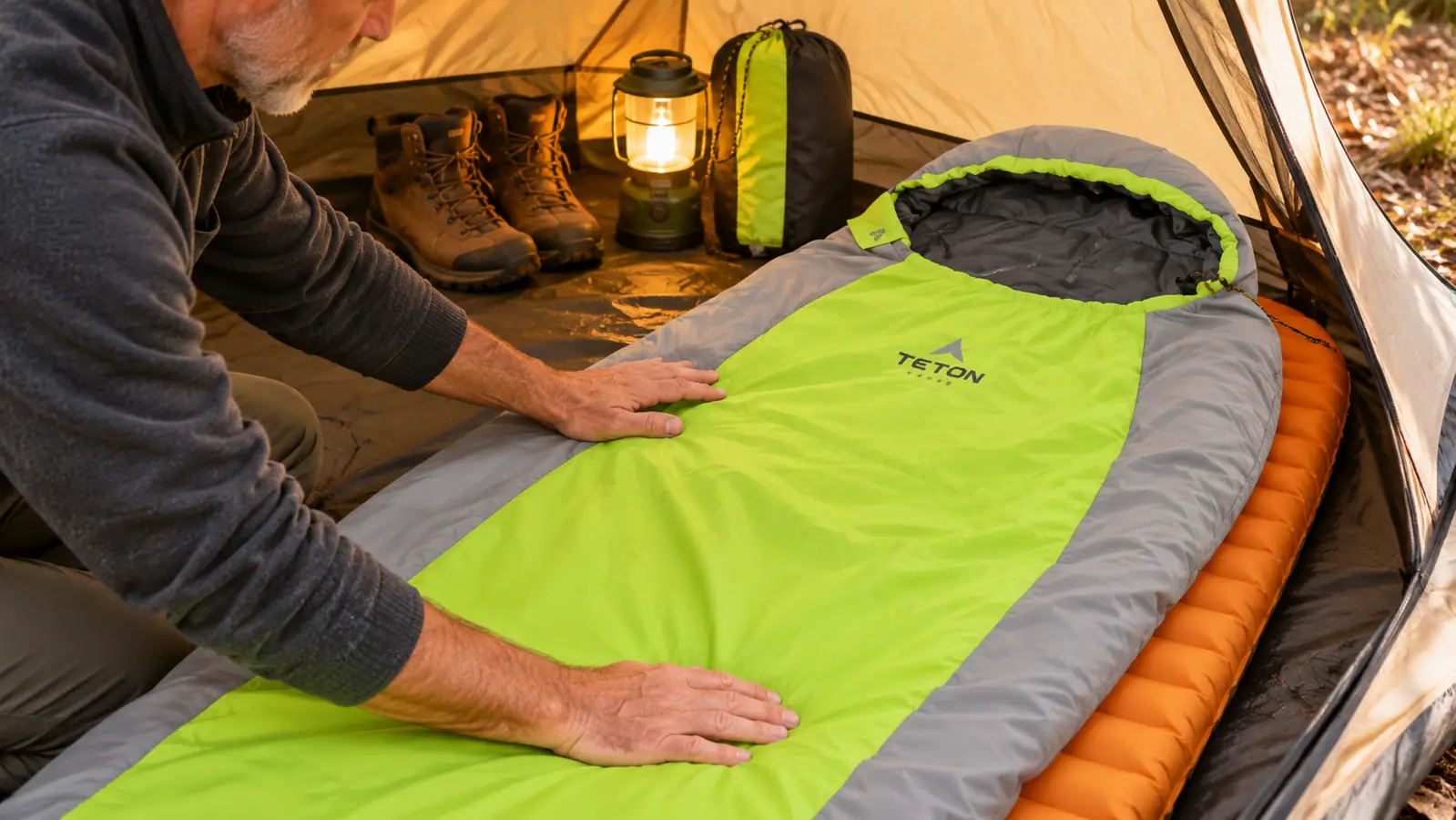
At 2.9 pounds it is a real pack weight
Two point nine pounds is the listed weight. That is not the lightest bag on the shelf and I am not going to pretend otherwise. It is also not the eight-pound rectangle I borrowed in 1989. On a three-night trip with a shelter, a pad, food and water, that weight disappears into the total. My knee notices steep descents and loose scree, not two point nine pounds of sleeping bag.
The compression sack comes with it and actually cinches down
The bag ships with a compression sack, and it pulls down smaller than the stuff sack my old bag came in. That matters in a fifty-liter pack where the sleeping bag competes with the food bag. I pull the straps, sit on it once, pull again, and it drops into the bottom of the pack without a fight. Small thing, I know. A pack is made of small things.
The temperature ratings tell you the truth if you read them honestly
TETON Sports labels this a 20F bag, and the listing is unusually straight about what that means: survival rated to +20F, comfort rated 20 to 30 degrees higher. So I plan for the forties and treat the twenties as the number where I would be cold but not in danger. Once I started reading ratings that way, I stopped being surprised on cold nights. Most bad nights are a rating problem, not a bag problem.
The mummy hood keeps the heat where you lose it fastest
Heat leaves through your head and neck faster than anywhere else, and a hood is the cheapest fix there is. I cinch it down to a small opening, tuck my chin, and I am noticeably warmer within ten minutes. The hood on this bag is shaped to sit around the face without swallowing it. It also means I wear a lighter hat to bed, which is one less thing to lose in the dark at the bottom of a tent.
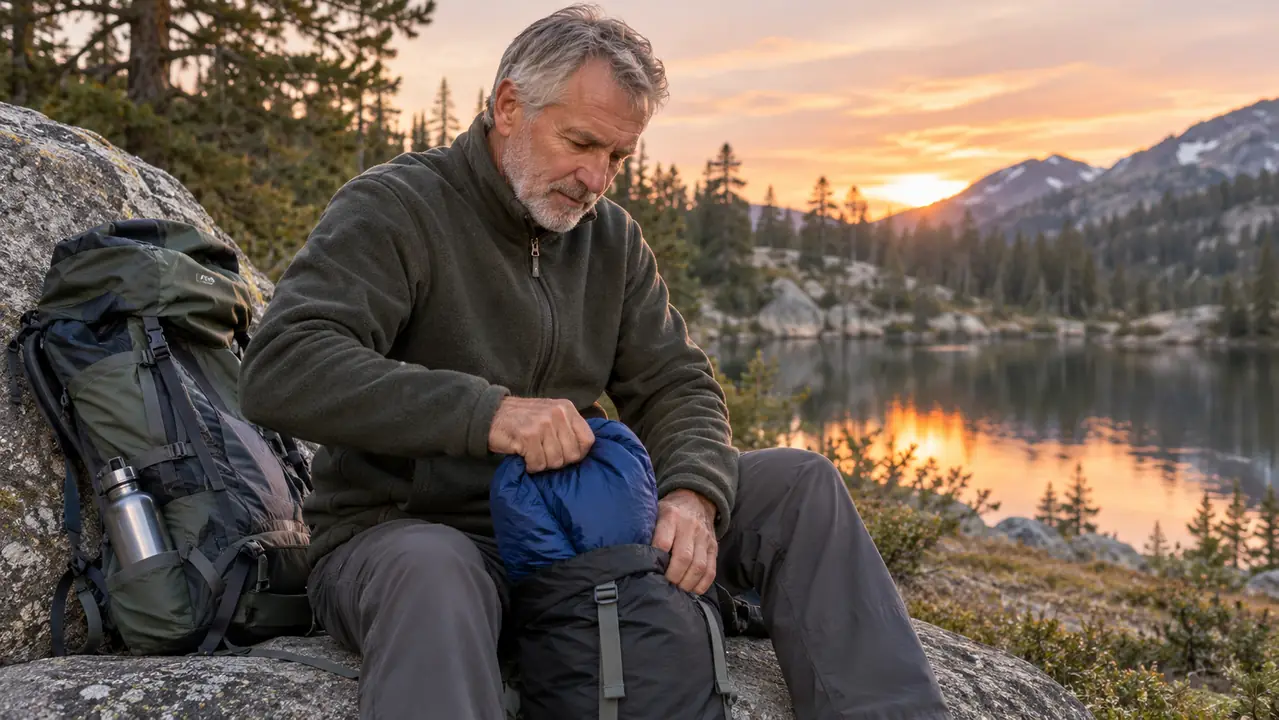
The draft tube and vaulted footbox close the two gaps that freeze you
Two places always leak cold: along the zipper and at the toes. A zipper draft tube blocks the first. A vaulted footbox gives your feet room to stay upright instead of pressing flat against the end of the bag. I am a side sleeper with cold feet, and this is the first detail I check on any bag now. It has held up through two seasons without a snag or a tear.
The ripstop shell handles a wet tent wall without drama
The shell is ripstop polyester over a microfiber fabric, and it does not soak through when it brushes the condensation on the tent wall. I have woken with the foot of the bag pressed against wet nylon and found it damp outside and dry inside. That is the entire job of a shell. It does not need to be clever. It needs to not fail at five in the morning when you are too tired to fix it.
At 87 inches long it fits tall sleepers
The bag measures 87 inches long and 32 inches wide, with a height recommendation that runs to 7 feet. Dale is six foot three and spent years with his toes jammed into the end of borrowed bags, which meant he slept curled and grumpy. He fits in this one with room. If you are tall, or you sleep next to someone tall, that detail is worth more than a few saved ounces.
You can wash it at home and it comes back to life
A synthetic bag goes into a front-loading machine on gentle with a mild detergent, gets a low tumble, and comes back lofted. Down needs specialty washing, a long dry, and a certain amount of luck. I wash mine at the end of every season and store it loose in the garage, and it has not lost noticeable loft in two years. Low maintenance matters more at sixty-one than it did at thirty.
It takes the abuse real trips hand out
I have sat on it, stuffed it wet, lent it to a friend's teenager, and used it as a cushion on a granite slab at lunch. A synthetic bag does not demand the careful handling a down bag does, and that freedom changes how I use my gear. I am not gentle with equipment. I want gear that tolerates a real person on a real trip, and this one does. That is the quiet argument for a TETON Sports bag over a fancier one.
What I'd Skip
This is not a winter bag, whatever the all-seasons label on the listing suggests. The survival rating is +20F and the comfort range sits well above that, which is right for summer and shoulder seasons in the Cascades and wrong for a January trip in the snow. It is also bulkier than a down bag of similar warmth, and if you are counting every ounce on a long thru-hike, this is not the bag you want. And no sleeping bag replaces a pad. My back dislikes thin foam, so I carry an insulated pad with this bag and I would carry it with any bag on the shelf.
Survival rated to +20F. Comfort rated 20 to 30 degrees warmer. Once I planned my trips around the second number, I stopped having bad nights.
If your September nights keep running cold, start here
A synthetic mummy rated +20F survival, 2.9 pounds, 87 inches long, with a hood, draft tube and vaulted footbox. Pair it with an insulated pad and pack accordingly.
Amazon Check Today's Price on Amazon →