
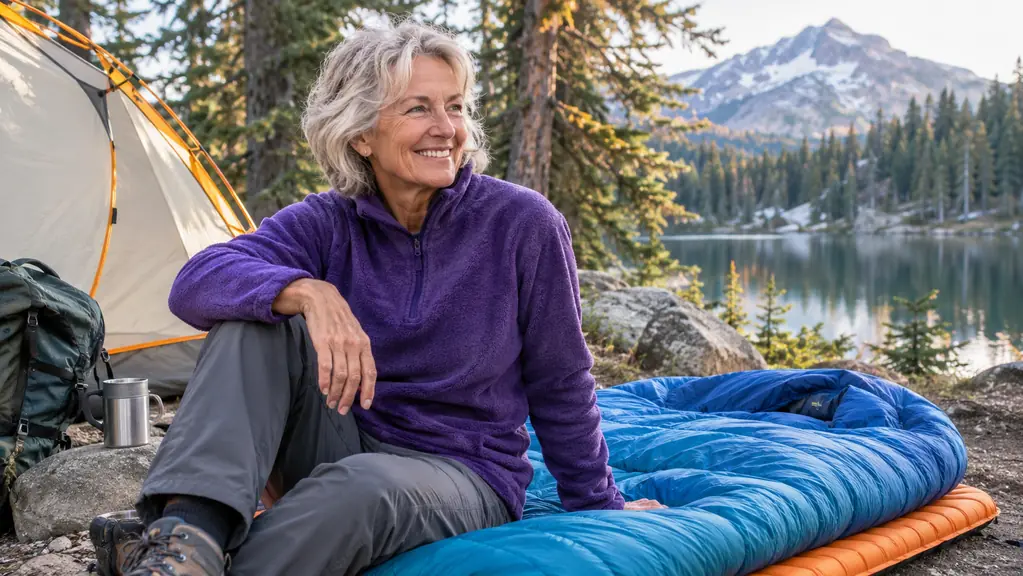
The first night I slept in the TETON Sports 20F sleeping bag, the thermometer outside our tent read 34 degrees at two in the morning. I woke up warm. Not hot, not sweating, just warm enough that I rolled over and went back to sleep. For a bag that weighs 2.9 pounds and packs down smaller than my cook pot, that surprised me more than it probably should have.
I am 61, a retired middle school science teacher in Bend, Oregon, and I have a left knee that has never forgiven me for a ski injury in my thirties. Dale and I car camp out of a 2014 Subaru Outback most summer weekends and take two or three-night backpacking trips into the Three Sisters Wilderness once the crowds thin out. Shoulder season up there means nights near freezing. I have slept in this bag on grass, on granite, in the back of the car with the seats folded down, and once on a root system near Green Lakes that I would not recommend to anyone. Two full seasons now, somewhere past thirty nights. Here is what I actually think of it.
The Quick Verdict
A warm, honest synthetic mummy bag for people who camp more than they post about it. The 20F number is a survival rating, not a comfort rating, so plan on it holding you to about 40 degrees and you will be perfectly happy.
Amazon Check Today's Price →If your nights land in the thirties and forties, this is the bag I would hand you
The TETON Sports 20F is the bag I keep reaching for on Cascade Lakes weekends and short backpacking trips. Check today's price and the current listing details on Amazon before your next trip.
Amazon Check Today's Price on Amazon →How I've Used It
Most of its nights have been car camping, which is the easy test. Almost any bag passes that. The real test came in September two years ago, on a three-night loop out of the Devils Lake trailhead. We hiked in about five miles, set up on a flat spot below the pass, and the first night the temperature sat right at freezing. I was wearing long underwear, a fleece, wool socks, and a hat, and I slept through until about five, which is roughly two hours later than I manage at home.
The second thing I noticed, and this matters at my age, is that the bag does not fight me when I turn over. I am a side sleeper who ends up on her back by morning, and a mummy bag can feel like a straitjacket if the cut is stingy. The 32-inch width at the shoulders gives me just enough room to roll without hauling the whole bag along with me. Dale says I look like a caterpillar in a sleeping bag race. He is not wrong.
The third thing is the wear. Two seasons of stuffing it into the included compression sack, hauling it in and out of the car, and dragging it across granite, and the ripstop shell has no tears and the zipper has not skipped once. The zipper is the part that usually fails first on any bag. So far, so good.
Care has been uneventful. I washed it once at the end of the first season on a gentle cycle and dried it on low with a couple of clean tennis balls, and it came back with the loft it started with. I am not gentle with gear. It has not complained.
One more data point on durability, because this is the sort of thing a review written after two nights cannot tell you. Last August I lent it to our neighbor's son for a scout trip to Paulina Lake and it came back with a pine sap stain on the shell and nothing else wrong with it. A dab of dish soap and a soft brush lifted the sap without marking the fabric. That puts the bag somewhere around forty nights across two seasons, and the insulation still lofts up when I shake it out. A synthetic bag that has stopped lofting is a bag that has stopped working, and this one has not.
What the 20F Rating Really Means
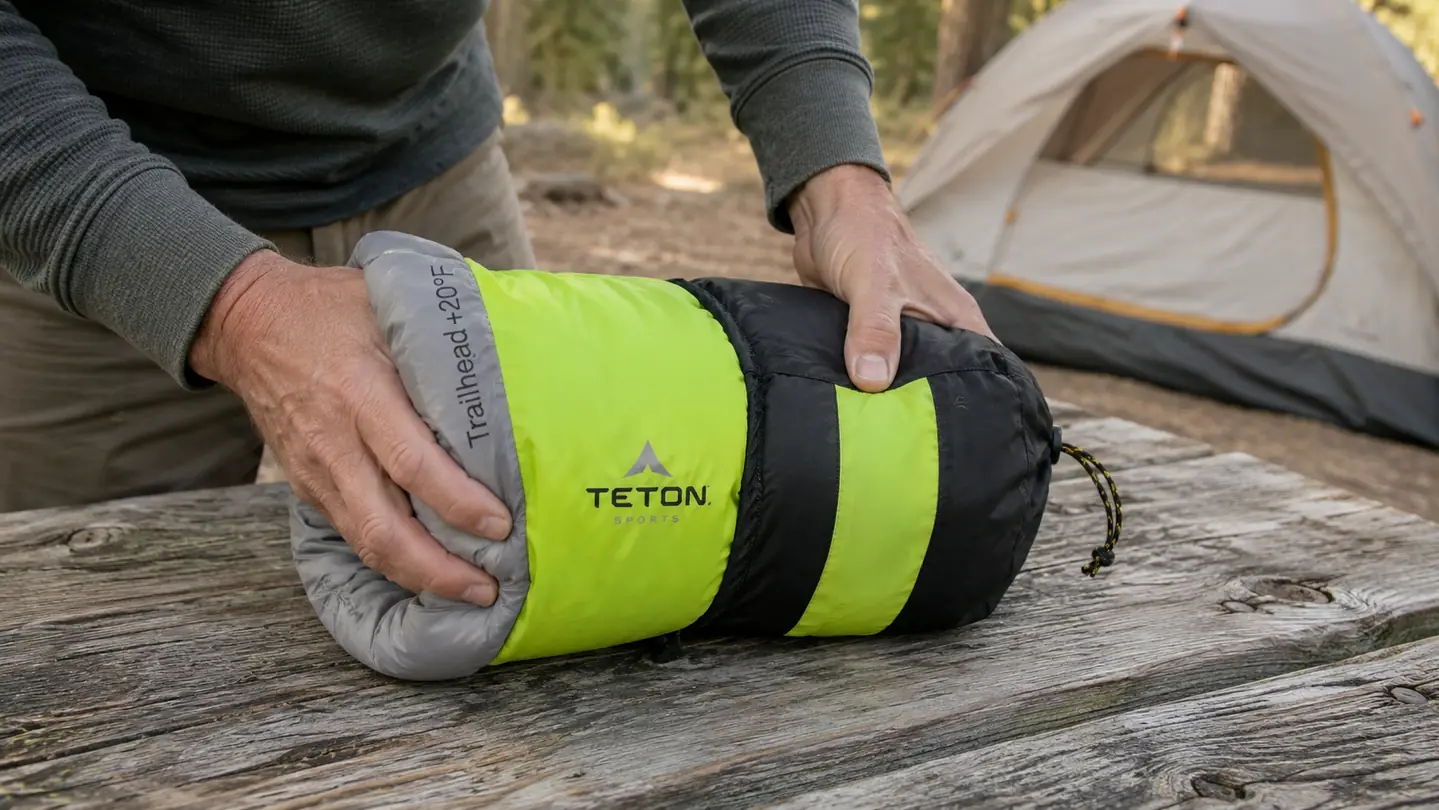
Here is the part of this review that will save you a cold night. The TETON Sports listing calls the bag survival rated to +20F and comfort rated 20 to 30 degrees higher. Read that again. Comfort rated 20 to 30 degrees higher means the temperature where most people actually sleep well is somewhere between 40 and 50 degrees, and 20 degrees above zero is the number where you survive the night, not the number where you enjoy it.
That is not a knock on TETON Sports. Nearly every sleeping bag maker rates bags this way, and the ones that do not are charging you a great deal more for a comfort number they can defend. What it means practically is that you should buy this bag for nights in the thirties and forties, and treat a hard freeze as a night where you wear your puffy to bed and do not sleep especially well.
My experience matches the math. At 34 degrees I was comfortable in long underwear and a fleece. At 28 degrees on the second night of that September trip I was warm enough to sleep, but I woke twice and put my hat back on. Below about 25, I would want a different bag or a liner. For Cascade Lakes in July and August, which is when most of us are actually out there, this bag is more than enough.
The night that taught me the difference was in late August, at a little lake just off the Cascade Lakes Highway, when the forecast said 38 and the actual low was 26. I had a thin foam pad under me and a wool base layer on, and I spent the night half awake, curled tight, hood cinched down to a pinhole. None of that was really the bag's fault. It was the pad, and the forecast, and my own stubbornness about not walking back to the car for the thicker pad. But it is the clearest illustration I can give you of where the comfort line actually sits.
The listing itself says you will sleep warmer if you use a camp pad and wear a hat, which is unusually candid for a product page and matches what I found. The first night I used a thin closed-cell pad and I was cold from underneath by four in the morning. The second night I switched to my thicker inflatable and the difference was not subtle. No bag can warm what is under it.
The 20F on the tag is the temperature you survive. The temperature you enjoy is closer to 40. Plan for that and this bag will not let you down.
Construction Details That Hold Up After Thirty Nights
The hood is the feature I underrate every single time and appreciate on every cold night. It cinches down around your face and traps the heat that would otherwise leak out of the one opening a mummy bag has. On this bag the hood is roomy enough that I can wear a hat inside it without feeling muzzled. The zipper draft tube, the flap of fabric that runs behind the zipper, does the boring job of keeping cold air from coming in through the teeth. It works, though you do have to remember to tuck it flat before you zip.
The vaulted footbox is the other one worth mentioning. A lot of mummy bags taper to a point at the bottom, which sounds efficient until you realize your feet are jammed into a wedge all night. This one has extra room at the toe, so my feet stay flat and my toes are not pressed together by morning. Small thing. Very noticeable on night three.
The shell is a ripstop polyester over a microfiber lining, and it has the slightly slick, slightly noisy feel that synthetic bags have. It is not the softest fabric you will ever touch. It does slide against a sleeping pad instead of grabbing it, which makes getting in and out easier in a small tent at two in the morning when your knee is stiff and your balance is not what it was.
The zipper deserves its own note, because on inexpensive bags it is the first thing to go. This one runs the full length of the bag, and after two seasons it still catches the draft tube now and then if I zip too fast. The fix is to hold the fabric flat with one hand while you pull with the other, a two-second habit once you have it. I have not had a single skipped tooth, and I have owned bags where the pull came off in my hand inside the first month. That is the sort of failure that ends a trip early, and it has not happened here.
Weight, Pack Size, and What My Back Thinks
The bag is listed at 2.9 pounds, 87 inches long by 32 inches wide, with a maximum height recommendation of seven feet. I am five foot four and I swim in it, which is fine, because a longer bag lets me shove tomorrow's clothes down at my feet so they are not freezing when I get dressed. If you are a tall person, this is genuinely one of the few synthetic bags in its class that will fit you without your shoulders jammed against the seams.
I measured the packed size once out of curiosity, because the listing does not give you a number and I wanted one. Squeezed down in the compression sack it comes out close to the size of a gallon jug, maybe a touch longer and a touch narrower. That is the honest answer to whether it fits in a 50-liter pack alongside a stove, a filter, three days of food and a puffy. It does, but it takes the bottom third of the pack and you will be packing around it. In the car, none of that matters at all.
At 2.9 pounds it is not an ultralight bag and I am not going to pretend it is. It is, however, light enough that I stopped noticing it in my pack by the second mile. My back is the picky one in this household. It dislikes thin pads and it dislikes a pack that sits crooked, and a bag that stuffs into its own compression sack and weighs under three pounds is not what wakes me up at night. My knee complains about total pack weight regardless, so I have started leaving the camp chair at home. Fair trade.
Packing it into the Outback is a non-event. It lives in the compression sack in the back with the camp stove and the folding table, and it has never once been the thing that made the car feel full. On backpacking trips it goes in the bottom of my pack, which is where a bag this size wants to be anyway.
Where It Falls Short
The mummy cut is not for everyone. If you are a committed sprawler, or if you sleep on your stomach with one arm under the pillow, a tapered bag will annoy you by the second night. Dale tried mine once and handed it back. He now uses a rectangular bag and accepts the extra weight as the cost of sleeping like a human being.
The compression sack does its job, but it is a wrestling match on a cold morning when your hands are stiff. I repack mine at the car before we hike out, and I have gotten good at it, but the first few times I was sure I was going to tear a seam. I also wish the bag came with a separate storage sack for the off season, since storing synthetic insulation compressed is exactly what you are not supposed to do. I use an old cotton laundry bag instead.
What I Liked
- Warm and dry at 34 degrees in long underwear and a fleece
- Draft tube and cinching hood do the job they were designed for
- Vaulted footbox keeps your toes from being crushed all night
- 87 inches long, so tall campers actually fit inside it
- Ripstop shell and zipper have survived two full seasons
- 2.9 pounds stuffs small enough to disappear in a weekend pack
Where It Falls Short
- The 20F figure is a survival rating; comfort lands near 40 to 50
- Mummy cut is confining for side sleepers and stomach sleepers
- Compression sack takes real effort to close on a cold morning
- No separate storage sack included for the off season
- Synthetic shell is a bit slick and a bit noisy
Who This Is For
This bag makes sense for the camper who does most of their sleeping between June and September at altitude, where the nights land in the thirties and forties. It makes sense for the backpacker who wants synthetic insulation because they camp in damp places and does not want to baby a down bag. It makes sense for tall people, who get squeezed out of a lot of mummy bags. And it makes sense for someone who wants one bag that handles car camping and a two-night backpacking trip without owning two bags.
I compared the TETON Sports 20F against a down bag side by side in a separate piece, and the short version is that synthetic wins on wet weather and forgiveness while down wins on pack size and years of service. If you are weighing that decision yourself, the synthetic case is stronger than most people admit for three-season camping in the Pacific Northwest.
Who Should Skip It
Skip it if you camp in real winter, or if you routinely wake up to temperatures in the teens. Skip it if you are a stomach sleeper who needs room to spread out. Skip it if you are counting ounces for a long thru-hike, because 2.9 pounds is respectable but it is not a quilt. And skip it if you want a bag that opens flat into a blanket on a warm night, because the mummy shape does not do that.
One bag for car camping and weekend trips, rated honestly
Two seasons of real use, thirty-plus nights, and it is still the bag in the back of my car. If your camping nights land in the thirties and forties, check today's price and the current listing details on Amazon.
Amazon Check Today's Price on Amazon →