

Two pads, one question, and about five miles of trail between the answers. Every spring someone on the Cascade Lakes loop asks me whether a self inflating pad is worth the extra weight over a closed cell foam pad, and after three seasons of carrying both I have stopped giving a single answer. The Gear Doctors Oxylus does things a foam pad cannot do. A closed cell foam pad does things the Oxylus cannot do. Which one belongs in your pack depends on the night you are actually going to have, not on the night the catalog photograph shows.
Here is the short version, and I will spend the rest of this piece earning it. If you sleep cold, if your back has opinions about thin padding, and if shoulder season in the Cascades means frost on the tent fly by four in the morning, the Gear Doctors Oxylus is the pad I hand to my husband Dale without a word. If you count ounces, if you sleep on roots and granite, and if you want the one piece of equipment that cannot fail at two in the morning, a closed cell foam pad is the smarter carry. I own both. Neither has replaced the other, and I have stopped pretending one will.
| Gear Doctors Oxylus | Closed-Cell Foam Pad | |
|---|---|---|
| Warmth | 4.3 R-value core, built for shoulder season nights near freezing | Warm enough for July, thin once the ground goes cold |
| Cushion | 1.5 inches of air and foam, medium firmness, rated to 250 pounds | A fraction of an inch of solid foam, no give anywhere |
| Edge support | Rectangular with a real edge, so sitting up at dawn is not a drop to the floor | Folds leave gaps and the edges taper |
| Packed weight | 2.2 pounds | Under a pound in most cases |
| Packed size | Rolls into the included carry bag and rides on top of the pack | Folds flat and straps to the outside of the pack |
| Puncture resistance | Air and foam inside a shell, so a thorn or a hot ash ends the night | Solid foam, nothing to puncture or leak |
| Setup | Unroll, open the valve, under five minutes to sleep ready | Unroll and lie down, nothing to inflate |
| Weight capacity | Rated to 250 pounds | No stated limit, the foam simply compresses |
| Best for | Cold nights, side sleepers, car camping, sore backs | Long light trips, warm ground, a pad that doubles as a seat |
Where the Gear Doctors Oxylus Wins
The 4.3 R-value core is the entire argument, and it is not a marketing number. A self inflating pad is foam with air trapped inside it, so you are sleeping on two insulators instead of one. On a late September night in the Three Sisters Wilderness, with the forecast calling for thirty one degrees and a wind that comes down off the ridge after dark, the gap between a 4.3 R-value pad and a plain foam mat is the gap between sleeping and lying awake cataloguing the cold in your hip. I have done both. The cataloguing is worse. The night I keep coming back to was the second week of October two years ago, at a lake around 5,400 feet, when the water in my bottle had a skin of ice on it by six in the morning. I had the foam pad that trip because Dale had talked me into going light. I spent the small hours with my knees drawn up and a fleece wrapped around my hips, and I was genuinely angry by dawn, which is a stupid way to feel in a place that beautiful.
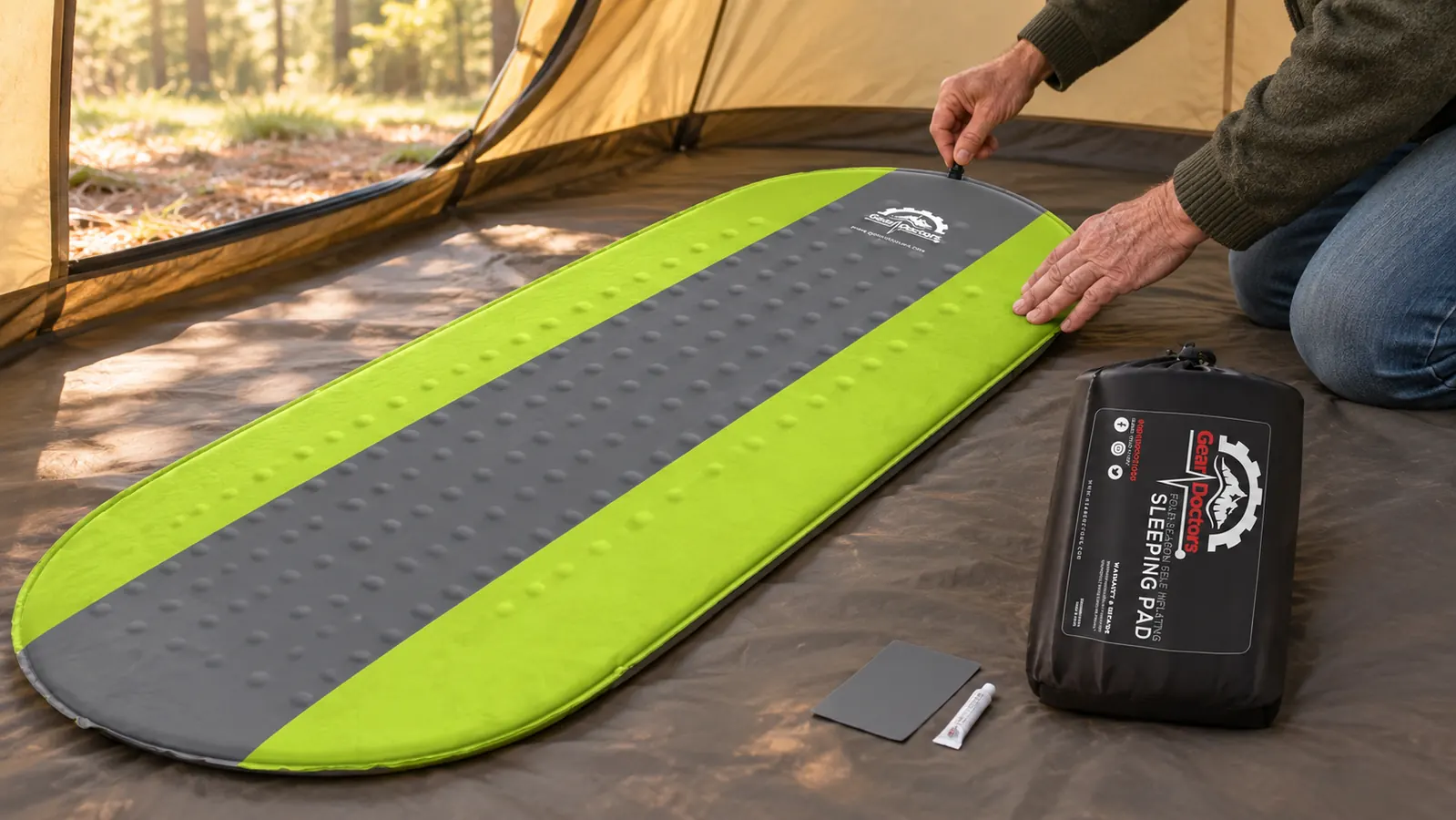
Then there is thickness, which is where my back starts paying attention. The Oxylus is 1.5 inches thick, 72 inches long, 22 inches wide, rectangular, medium firmness, rated to 250 pounds. That reads like a spec sheet. What it feels like is a pad you can roll onto your side on without your hip finding the ground, and a pad with a real edge, so when you sit up to pull your boots on at 5:40 in the morning you are not suddenly sitting on the tent floor. My left knee is held together by guesswork from a ski injury in my thirties, and getting up in the dark is the part of camping nobody writes about. This pad makes that part ordinary.
Setup is a valve and a little patience. Unroll it, open the valve, and the foam pulls air in on its own while you lay out your sleeping bag and find your headlamp. Gear Doctors says under five minutes from pack to sleep ready, and that matches what I have seen, with one honest caveat: on the first night out of the car I usually give it a breath or two at the valve to get it where I want it. It ships with a carry bag and a repair patch, which is the right short list. The patch is the part I want and hope never to use.
Where the Closed-Cell Foam Pad Wins
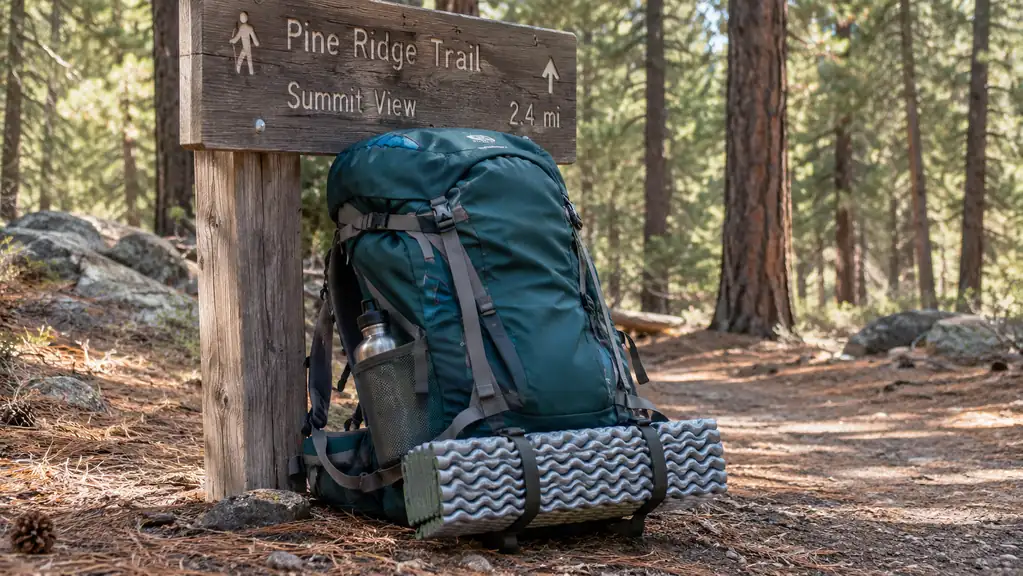
Now the other side, and it is a real side. The Oxylus weighs 2.2 pounds. A closed cell foam pad of the folding sort weighs a fraction of that, under a pound in most cases, and on a three night trip that difference is a day of food or the warmer layer you actually wear. Dale carries foam on the trips where we move camp every day, and I can hear him thinking about the weight while I strap my rolled pad to the top of my pack. If you are counting ounces and every one of them is spoken for, foam wins and it is not close.
Foam also cannot let you down. There is no valve to jam, no baffle to separate, no slow leak you discover at eleven at night by lying on the ground in your long johns. A thorn does not end your trip. You can drop it on granite, sit on it while you eat lunch, use it as a bench at a viewpoint, strap it to the outside of a pack where it gets rained on and shoved under a bus seat, and it is still a pad the next morning. I own a foam pad older than my marriage. I do not expect to say that about anything with a valve in it. Mine has been used as a changing mat on wet gravel, sat on by half the crowd at a trailhead picnic, and dragged across a lava field by a gust of wind while I chased my hat downwind. It has two shallow creases and nothing else. That is not a small thing when the alternative is a two hour walk out in the dark.
Where foam also wins is every hour that is not sleeping. It is a seat, a knee pad while you filter water, a dry place to set your pack down, a windbreak at lunch. Mine rides folded on the outside of the pack and gets used four or five times before it ever becomes a bed. The Oxylus does one job extremely well and stays in its bag until bedtime, which is fine as long as you have thought about what happens if that one job fails.
How I've Been Testing Both
My testing is not a lab. It is a 2014 Subaru Outback with too much in the back, car camping at Cascade Lakes campgrounds from June through September, and two or three night trips into the Three Sisters Wilderness in the shoulder seasons when the nights get down near freezing. I am 61, retired from teaching middle school science, and I have slept on the ground since I was a kid in a canvas tent that smelled like mildew. Both pads have gone on the same trips, and sometimes both go in the car.
What I pay attention to is the second night. The first night you are tired enough to sleep on a driveway. The second night you notice things: whether your shoulder has gone numb, whether your hip is resting on the ground, whether the pad has crept off the tent floor while you slept, whether you are warm at the coldest hour, which is always just before dawn. I keep a small notebook for this, which is the science teacher in me, and the entries are not technical. They say things like "2:40 a.m., hip cold, pad half off the floor" or "woke warm, knee fine, heard the lake." I started writing them down because I did not trust my memory of a trip to be honest about a purchase I had already made. The Oxylus has held up better on second and third nights than any foam pad I have used. The foam pad has never once needed anything from me. That is the trade, stated plainly, and no amount of reading spec sheets replaces a night on the ground.
One more thing about the comparison, because it matters and nobody mentions it. These two pads do not fail in the same way. Foam degrades slowly and quietly, going flatter each season until you notice you are sleeping on the ground and cannot remember when it started. The Oxylus either works or it does not, and if it does not you will know within about ten minutes of lying down. That predictability is worth something, even if it comes with a valve and 2.2 pounds.
Stop negotiating with a cold hip at four in the morning
The Gear Doctors Oxylus is the pad I pack when the forecast says frost. A 4.3 R-value core, 1.5 inches thick, 72 by 22 inches, 2.2 pounds, with a carry bag and a repair patch in the box.
Amazon Check Today's Price on Amazon →Who Should Buy Which
Buy the Gear Doctors Oxylus if you sleep cold, if you are past the age where a quarter inch of foam feels like plenty, if you camp in the shoulder seasons, or if you car camp out of a wagon where weight is somebody else's problem. It is also the right pad for a side sleeper, because 1.5 inches and a 250 pound rating is enough to keep a hip off the ground. My back has disliked thin pads for about a decade and it has no complaints about this one.
Buy a closed cell foam pad if your trips are long and light, if you hike in summer heat where the ground stays warm all night, if you sleep on your back and genuinely do not mind firm, or if you want a pad that doubles as a seat and a dry spot to set your pack. It is also the sensible second pad to leave in the car, and the sane choice for anyone who has had an inflatable fail on night two of a four night trip and spent the rest of the trip on the ground listening to their own spine.
The answer I actually give people is that these are not the same purchase. One is comfort equipment. One is insurance. If you can only take one and you are sleeping on cold ground, take the Oxylus. If you can only take one and pack weight is the thing that decides whether the trip happens at all, take the foam. And if you are car camping out of an old Outback like mine, take both, because the car does not care about a pound. There is a third case worth naming. If you are new to this and buying your first pad at sixty, do not buy the cheapest inflatable you find at a big box store and hope. I did that once, in my forties, and it lost air somewhere around two in the morning on the second night of a three night trip. I finished that trip on the ground with my knees aching and my opinion of bargains permanently revised. Buy the pad with the R-value you need and the thickness your back asked for, or buy the foam and accept exactly what it is. I keep a longer set of notes on living with the Oxylus over a full season elsewhere on this site if you want the slower version of this comparison.
Comfort equipment, not a gamble on the weather
If frost is on the forecast and your back has been voting no on thin foam all summer, the Gear Doctors Oxylus is the pad I would hand you across the tailgate. 4.3 R-value, 72 by 22 inches, 1.5 inches thick, 2.2 pounds, medium firmness.
Amazon Check Today's Price on Amazon →