
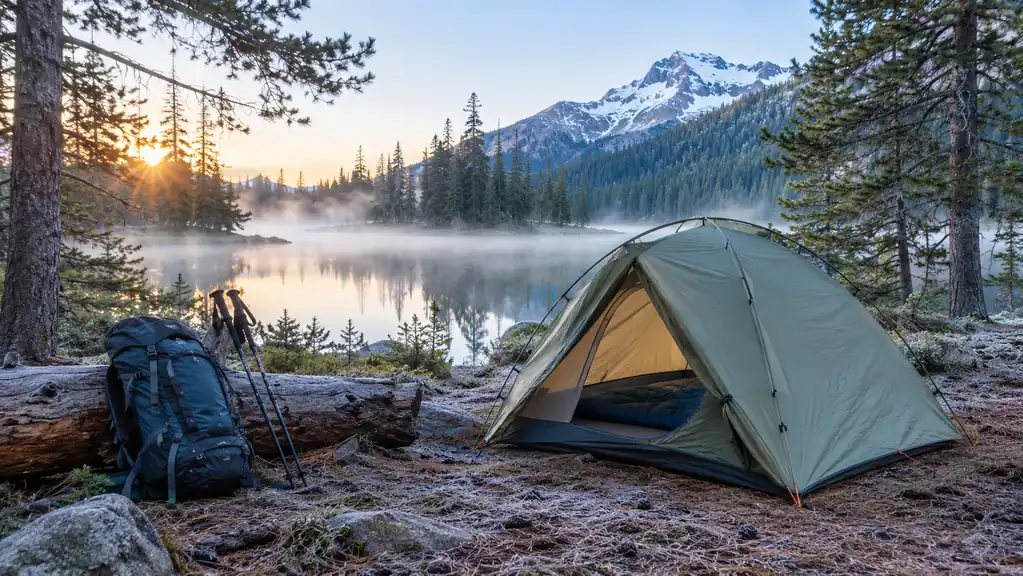
The first night I spent in the Naturehike Cloud-Up 2 was at a Cascade Lakes campground in the last week of June, and my little pack thermometer read 34 degrees when I crawled out at six the next morning. I had bought the tent for backpacking and then used it for everything, which is how testing usually goes once you stop being precious about gear. I am 61. My left knee has never forgiven a ski injury from my thirties, and my back has firm opinions about anything thinner than two inches. Three seasons and somewhere around forty nights later, I know this tent better than I know most of my kitchen appliances.
Here is what the Naturehike Cloud-Up 2 actually is. A two-person, three-season, free-standing tent that weighs 4.3 pounds and packs down to 15.7 by 5.1 by 5.1 inches, with the footprint included. The interior measures 82.7 inches long, 49.2 inches wide, and 41.3 inches tall at the peak. That set of numbers is the whole argument. It is light enough for a two or three night trip into the Three Sisters Wilderness and big enough that Dale and I are not negotiating elbow room at nine at night. It is not the lightest tent you can buy and it is not the roomiest. It lives in the middle, and the middle turns out to be a very livable place.
The Quick Verdict
A free-standing three-season two-person tent that carries like something smaller and sleeps like a small room. It has earned its spot in my garage across three seasons, with two real complaints I get to further down.
Amazon Check Today's Price →The tent I stopped shopping for in my second season
I bought it expecting to replace it inside a year. Three seasons later the only thing I have replaced is the knot on the stuff sack. Check today's price and confirm the footprint is still in the listing before you commit.
Amazon Check Today's Price on Amazon →How I've Used It
Most of my nights in this tent are car camping at Cascade Lakes, where the Outback is fifty feet away and weight does not matter at all. The trips that actually matter are the two and three nighters on the Green Lakes and Moraine Lake trails, because that is where 4.3 pounds either earns its keep or does not. I carry the tent. Dale carries the stove and the food, partly because he is 6 foot 1 and I am not, and partly because he is nicer about it than I would be.
I have pitched it on packed dirt, on deep pine duff, on wet grass at a lower elevation campground in September, and once on a slab of volcanic rock near Broken Top where I got four pegs in and tied two wind ropes off to a juniper. Shoulder season here drops to freezing at night more often than not. The tent has been through two sustained rain events and one gusty afternoon that sent a neighboring canopy end over end. I have not been wet inside. The poles have not bent.
I keep a small notebook in the top lid of my pack with pitches and nights in it, which is a habit from thirty years of teaching science and grading lab reports. The Naturehike shows up on forty-one entries between late June and early October across three years. The longest stretch was a three night trip out of the Green Lakes trailhead in the second week of September, when the forecast said forty percent chance and delivered a hundred. We walked in on a Friday afternoon, pitched on a flat spot behind a stand of lodgepole, and by eight that evening the rain had settled in for the duration. That trip is the reason I trust the tent, and it is also the reason I know exactly how much it condensates.
The version I own came with the footprint, which I would have bought separately anyway. If you are shopping, verify that the listing still includes it, because a footprint is one of those items you resent paying extra for and then use on every single trip without thinking about it.
What 4.3 Pounds Actually Buys You
I tried going lighter first. A friend lent me her sub-two-pound single-wall shelter for one trip in July, and I spent the night on my back listening to the fabric flap and feeling every root under a floor about as thick as a shower curtain. I am not saying it is a bad shelter. I am saying it was a bad shelter for me, and I knew that by four in the morning. It took a year before I went shopping again, because the lesson was that a pound saved is not a pound saved if you sleep four hours and then hike the next day on bad temper. The Cloud-Up 2 is what I bought after that experiment, and I have not gone looking since.
I have watched lighter shelters come and go from my garage. A sub-two-pound tent is a wonderful thing on a long thru-hike and a miserable thing on a cold night when your back is the thing you have to negotiate with. The Cloud-Up 2 carries about the weight of a serious two-person shelter and gives you a real floor, 41.3 inches of peak height, and poles that clip on rather than thread through sleeves. For a weekend backpacker in her sixties with a stiff knee, that is the right trade. I am not trying to set a speed record. I am trying to sleep.
The packed size is the part I notice most. 15.7 inches long and roughly five inches square means it drops into the bottom of a pack beside a sleeping bag and a stove without a fight. On car camping weekends it goes into the Outback in exactly that shape and I do not think about it again until Sunday.
The Clip Poles Are the Part I Underrated
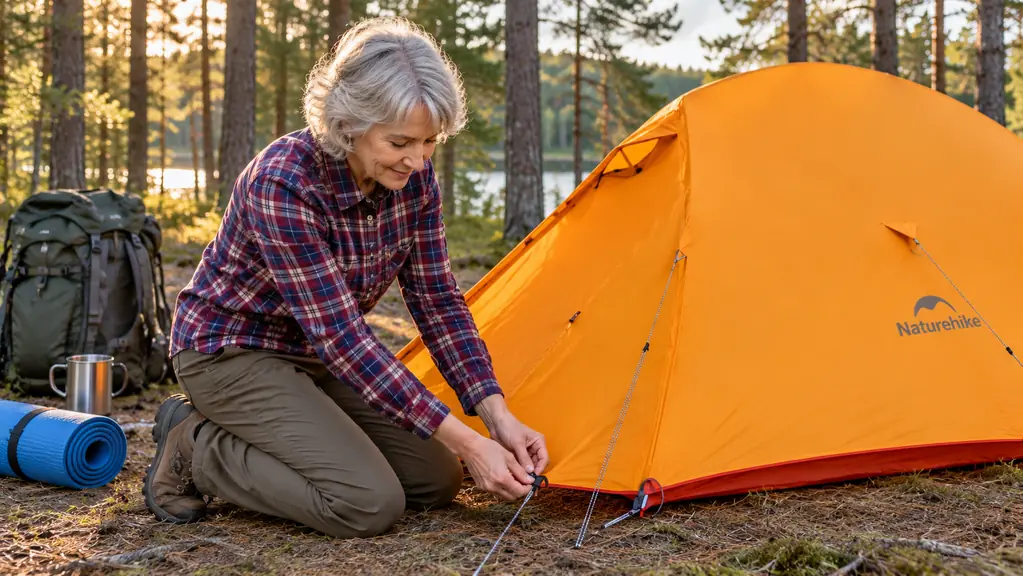
The poles attach with clips. I did not think this mattered until a wet evening when my hands were cold and the light was going and I needed the tent up quickly. Clipping takes me about four minutes by myself, six if the wind is up. There is no threading a pole down a long sleeve of fabric while the fabric flaps in your face, and that alone has saved me from saying things I would have to apologize for.
Free standing is the other part I underrated. On that volcanic slab I got four pegs into cracks and ran wind ropes to a juniper, and the tent stood on its own the entire night. A tent that needs staking at both ends would have turned that evening into a comedy routine. If you camp on rock, hard pan, or a wooden platform, this matters more than a few ounces.
I have been cold in this tent. I have been awake in this tent. I have been annoyed by condensation in this tent. I have never been wet in it, and after three seasons that is the sentence I care about.
Rain, Wind, and the 3000mm Number
The shell is 210T polyester with a waterproof coating rated past 3000mm. A number on a spec sheet is not the same as a night in weather, so here is the night in weather. September, lower elevation, six hours of steady rain, no wind to speak of. I woke up dry. The inside of the fly was beaded with condensation, which is entirely normal for two people breathing in a closed tent at 38 degrees, and I wiped it down with a bandanna before packing so nothing soaked through the rest of the load.
There is a detail from that rainy night worth passing along. I had pitched on a slight slope, which I did not discover until I was inside and my pad kept sliding toward the door. The water ran under the tent all night and stayed there, which is not something I could say about the tent I owned in my thirties. I also learned to walk a site before I pitch on it. Now I look for the low corner and put the door on the high side, and that one habit has done more for my dry mornings than any coating number on a box.
The wind afternoon is the one I tell people about. A front came through a campground and a canopy two sites over went end over end. I had all five wind ropes out and the Naturehike flexed and snapped back all afternoon. It is a lightweight tent and it moves in wind, which is what a lightweight tent is supposed to do. It did not come apart. If you camp somewhere genuinely exposed above treeline, this is not the shelter I would take, and I say so again below.
One more rain note, because it is the complaint I hear from other campers. A tent this size with two people inside will condensate. It is not leaking. It is your own breath landing on cold fabric. Learn to crack the door and the window and the problem drops by half, which took me an embarrassingly long time to figure out.
Sleeping in It for Three Nights Straight
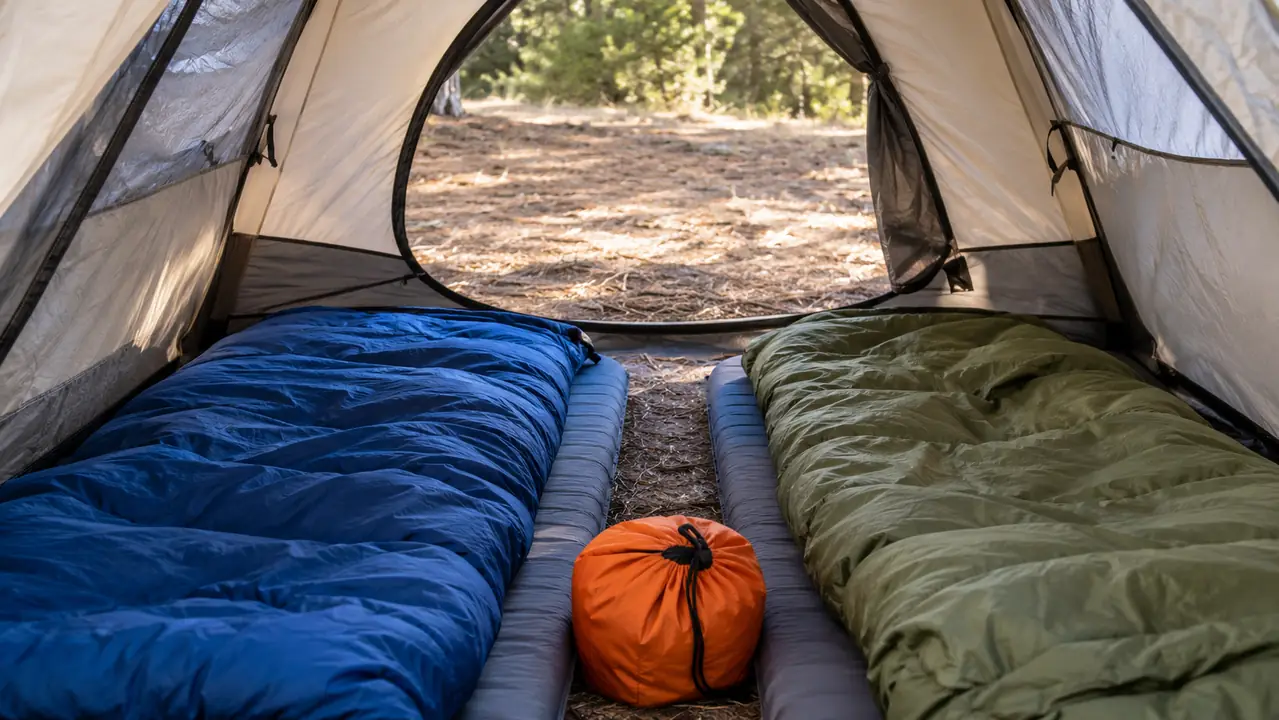
By the third night of that September trip I had a routine. Pad down first, sleeping bag unrolled on top while I still had daylight, tomorrow's dry clothes at the foot of the bag, and the headlamp set in the same corner every night so I could find it at two in the morning without pawing through a stuff sack. I slept in long underwear and a wool hat and I was warm at 36 degrees. Dale wore more and said he was fine. The thing I notice at my age is the getting up. A 41.3 inch peak means I can kneel and push up rather than crawl out on my hands and one bad knee, and after three nights of that my back is a good deal happier than it was in the low tent I used for years.
82.7 inches of length is enough that Dale, at 6 foot 1, does not touch either end wall. The 41.3 inch peak means I can sit up to pull on a fleece in the morning, and if you have ever tried to dress lying down in a low tent at 35 degrees, you know what that is worth. The 49.2 inches of width is where I have to be honest with you. Two 20 inch pads fit with a little room to spare. Two 25 inch pads will press against each other and against the wall. If you and your partner both sleep wide, this is a snug tent and you should hear that before you buy it.
The ventilation window above the front door is what made the second and third nights better than the first. Night one I zipped everything shut because I was cold, and I paid for it with a wet fly by morning. By night three I had learned to open the window and crack the door a few inches, and the condensation dropped by half. That is a habit more than a feature, but the window is what makes the habit possible.
There is no room for two packs inside. One goes at the foot of the pads and one waits outside. If you are backpacking, plan on pulling out what you need, leaving the packs out, and accepting the alternative, which is sleeping with your knees against a hip belt at two in the morning.
What I Liked
- Free standing and clips on, about four minutes to pitch alone
- 4.3 pounds and 15.7 by 5.1 by 5.1 packed, easy to fit in a weekend pack
- Stayed dry through six hours of steady rain at 38 degrees
- 82.7 inches of length fits a 6 foot 1 partner without touching the walls
- Footprint included with the tent
- Five wind ropes in the bag, and it stood through a gusty afternoon
Where It Falls Short
- Condensation is real with two people and the window shut
- 49.2 inches wide is snug for two wide sleeping pads
- No space inside for two backpacks
- Moves in wind, so it is not a shelter for exposed alpine camping
- Changing clothes happens sitting down, every time
Who This Is For
This is for the person who wants one tent that car camps on Friday and does a two night backpack trip on Saturday, and does not want to own two tents to make that work. It suits couples of ordinary height on 20 inch pads. It suits anyone whose back has ended the era of thin foam and who is willing to carry a few extra ounces to get a real floor and a real peak. It suits shoulder season camping in the thirties and forties, which is most of what we get here in the Cascades outside July and August.
It also suits the camper who sets up alone. I pitch this by myself more often than not while Dale filters water, and I have never needed a second set of hands.
Who Should Skip It
Skip it if you are covering long miles and counting ounces, because 4.3 pounds is a fair weight, not a light one. Skip it if you camp above treeline in exposed weather, because this is a three-season tent and it behaves exactly like one when the wind really arrives. Skip it if you are two large adults who both sleep wide, because 49.2 inches will turn you into people who bicker at midnight. And skip it if you want to stand up in your tent, because nobody stands up under a 41.3 inch peak.
There is a real difference between a tent like this and a dedicated freestanding car camping tent, and the short version is that the Cloud-Up 2 gives up some room and some sit-up height in order to be carryable at all. That is the trade. If your trips are all from the back of the Outback, take the bigger tent and sleep like a queen. If some of them start at a trailhead, this is the compromise that keeps you from owning two.
Three seasons in, it is still the tent I reach for first
No leaks, no bent poles, no regrets, and two complaints I would make to the designer over coffee. If that sounds like your kind of review, check the current listing and confirm the footprint is included.
Amazon Check Today's Price on Amazon →