
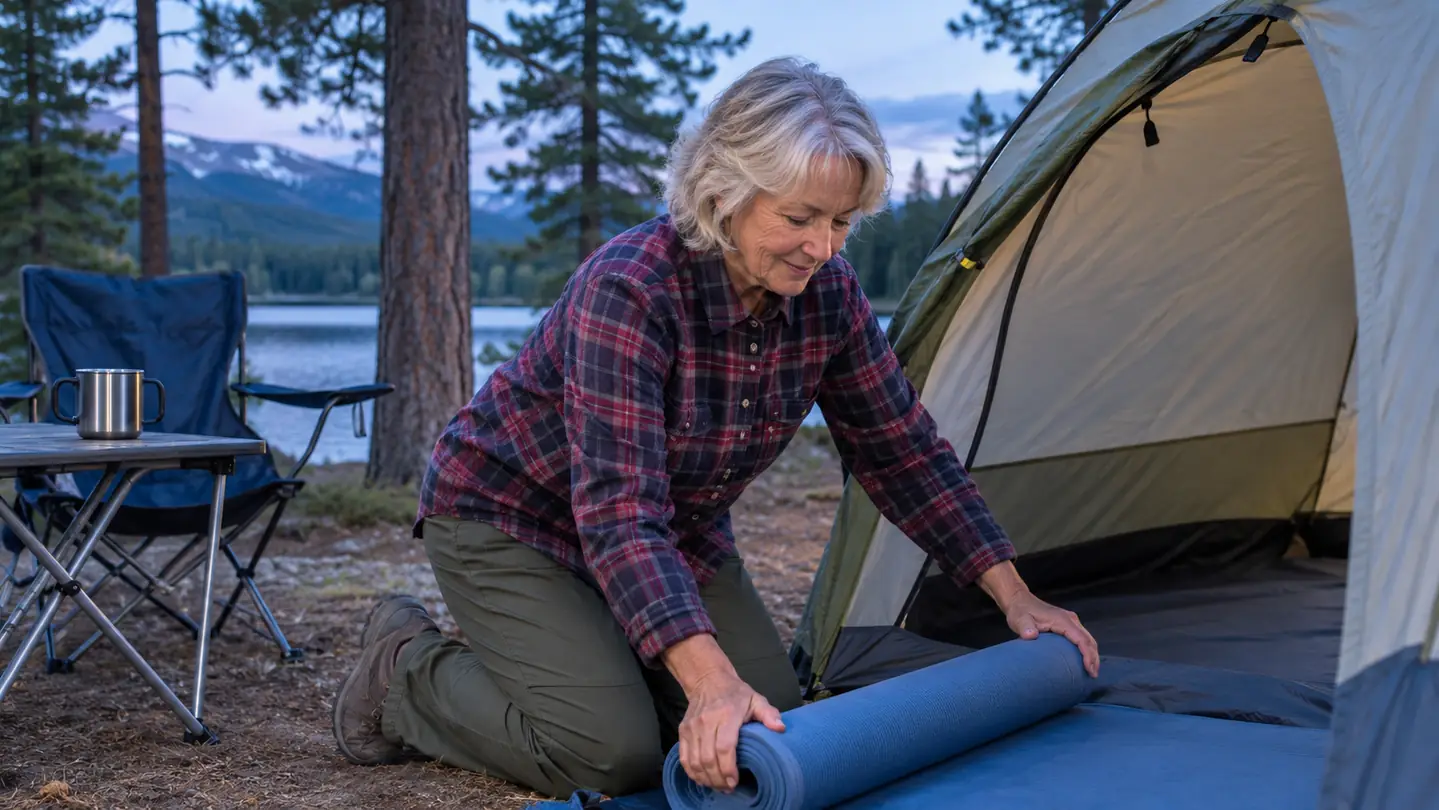
My back has opinions and it has gotten louder with age. It started objecting to thin foam pads somewhere around my fifty-fifth birthday, and it has not let up since. On a two-night trip into the Three Sisters Wilderness last September I spent more of the second night sitting up than lying down, and the walk out the next morning was a slow negotiation with my left knee.
What fixed it was not a bigger pack or a different tent. It was a slab of foam and air about an inch and a half thick. The Gear Doctors Oxylus is a self-inflating pad: you unroll it, open the valve, and the foam inside pulls air in until the thing is firm enough to sleep on. It weighs 2.2 pounds, it is rated 4.3 R-value, and it measures 72 inches long by 22 inches wide. Here are ten reasons it earned a permanent spot strapped to my pack.
Start with the thing your back touches all night
Gear Doctors Oxylus: 4.3 R-value, 1.5 inches of foam over an air core, 2.2 pounds packed. Rated to 250 pounds, 72 by 22 inches, self-inflating in under five minutes.
Amazon See it on Amazon →The 1.5-inch foam core is what your hip bone actually feels
Ask anyone with a cranky lower back what they remember about a bad night outdoors and they describe a pressure point, not a temperature. Mine is the left hip. The Oxylus carries 1.5 inches of foam over its air chamber, so the foam does the cushioning and the air does the support. On the second night of a trip in June I woke up on my side and nothing had gone numb. That had not happened on a thinner air pad I used the year before. Thickness is the whole argument here, and at my weight 1.5 inches is enough.
You inflate it with patience, not with your lungs
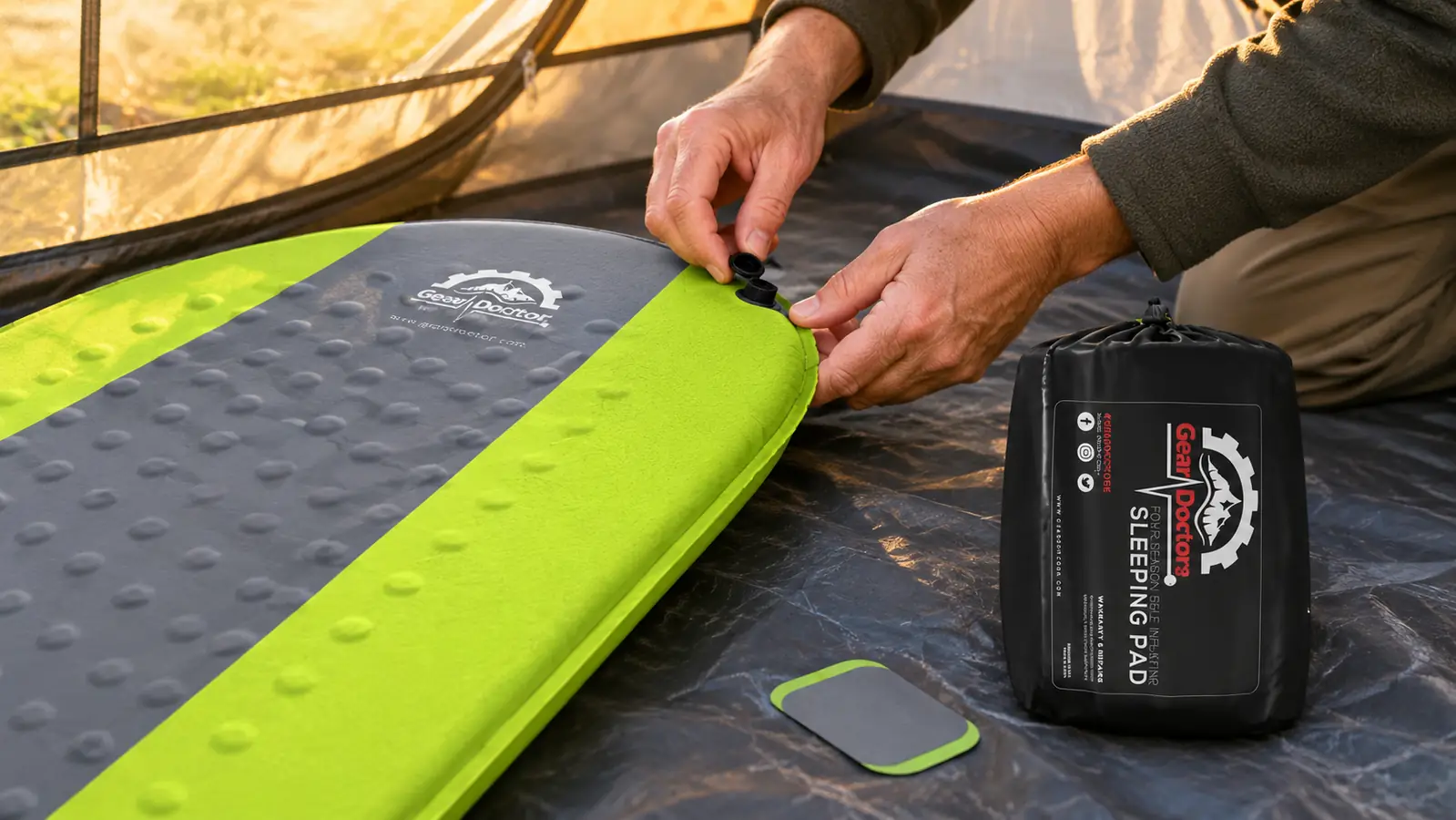
Unroll it, open the valve, and go do something else. The foam inside wants to expand and it drags air in with it as it goes. Gear Doctors puts pack-to-sleep-ready at under five minutes, and that matches what I have seen while I am also hanging a food bag and filling a water bladder. At the end I add one or two breaths to get it where I like it. Two breaths after a day of walking uphill at 6,000 feet is a fair trade.
A 4.3 R-value takes shoulder season off your worry list
Ground cold is what sneaks up on you in the Cascades. The air can be 45 degrees and pleasant while the ground pulls heat out of your back all night. This pad is rated 4.3 R-value, and I have slept on it in late September with frost on the tent and been fine without a closed-cell pad underneath. I still carry a thin foam square for sitting on at lunch. I no longer carry a second pad for warmth.
2.2 pounds is light enough that I stopped arguing with myself
Two point two pounds. That is the number that ended a long negotiation in my house. An air-only pad saves weight, a thick closed-cell foam pad costs more of it, and both had drawbacks my back kept pointing out at the worst possible moment. Gear Doctors built this one light enough that I strap it on without weighing alternatives at the tailgate. My pack is not a thru-hiker's pack. It is the pack of a 61-year-old who wants to keep doing two and three night trips.
72 inches of length keeps your heels on the pad
I am five foot six, so length is not usually my problem. My husband Dale is six foot one and it is absolutely his. At 72 inches this pad takes both of us without a heel hanging off the end and finding cold ground at two in the morning. If you are tall, measure yourself against 72 inches honestly before you buy. It is the dimension people forget to check and then blame the pad for.

22 inches wide and rectangular, so a side sleeper can roll
I sleep on my side and I roll. A 20 inch mummy cut pad had me waking up with an elbow on the tent floor. This one is rectangular and 22 inches across, and those extra two inches are the difference between a night of sleep and a wrestling match. It also means the edges stay put when I turn over, which matters more with every year that goes by.
Medium firmness rated to 250 pounds, and you can tune it
The pad is described as medium firmness and rated to 250 pounds capacity. I like mine a little softer for my back, so I open the valve for a few seconds, let some air out, and close it again. Dale likes his firmer and adds a breath. That is the whole adjustment mechanism and it is enough. No separate pump to keep track of and nothing to lose in the dark.
The valve is the only control, and that is the point
There is one valve. Open it to let the pad fill, close it to sleep, crack it to tune firmness. I have owned pads with more going on and I have never once wanted more going on at nine in the evening with a headlamp on my forehead. A single valve also means one thing to check before you roll it up, which cuts the odds of arriving at camp with a pad that has been quietly leaking in your pack all day.
It rolls into its own carry bag and rides outside the pack
The pad comes with a carry bag and a repair patch. Rolled, it straps to the outside of the 2014 Outback alongside the camp chairs and it does not eat the space I want for food and layers. On backpacking trips I lash it under the lid instead. Packed size is not the smallest you will find, and I would rather have the foam than the last inch of space.
The included repair patch covers the one mistake that ruins a trip
Granite is not kind to anything inflatable. A pinhole on night one of a three night trip used to mean sleeping on the ground or walking out early. The patch that comes in the bag is a small thing that buys a lot of peace of mind, and the surface is water resistant enough that a damp tent floor is not a problem. Check the groundsheet before you unroll. That habit plus the patch has kept me off the dirt.
What I'd Skip
Three things I would skip. First, skip the idea that any pad fixes a back. It buys you a better night; it does not replace the stretching and the physical therapy, and I would be lying to you if I said otherwise. Second, skip this one if you are counting ounces for a long thru-hike, because 2.2 pounds is not a racing weight and I will not pretend it is. Third, if you genuinely need three inches of loft under you, 1.5 inches will feel thin and you should look elsewhere. What Gear Doctors made here is a warm, simple pad at a sensible weight for weekend trips, and for that job I have not found better.
I have stopped buying equipment that assumes I am younger than I am. This pad asks for two breaths and five minutes, and by the second night my back has stopped filing complaints.
Two breaths and five minutes, then sleep
If your back has been running the trip lately, start with the pad rather than the tent. Gear Doctors Oxylus: 4.3 R-value, 72 by 22 inches, 2.2 pounds, with a carry bag and repair patch in the box.
Amazon Check Today's Price on Amazon →