
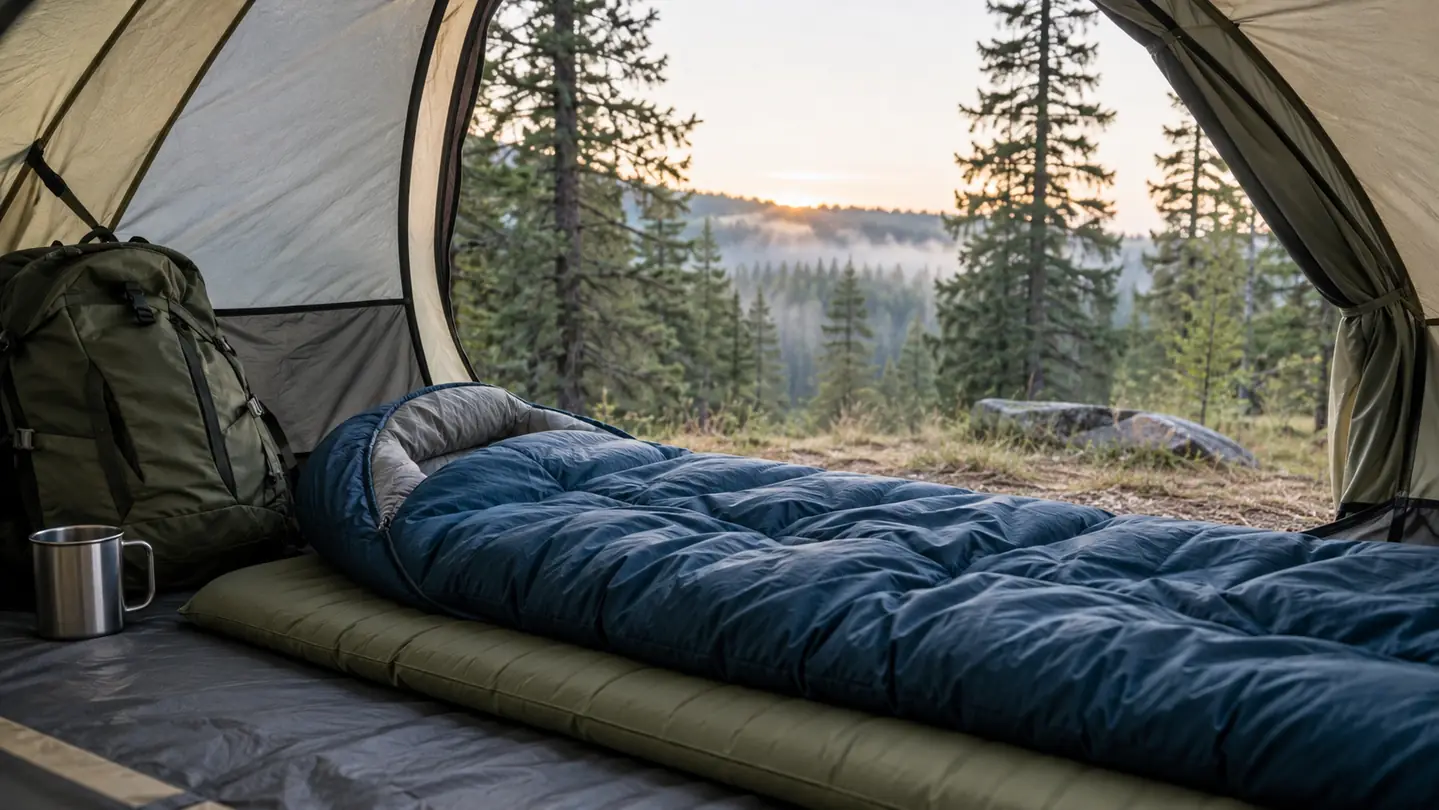
I woke up at 2:40 in the morning at Green Lakes with my back already finished for the night. Not a sharp pain, nothing dramatic enough to wake Dale. Just that dull hand pressing on my lower back, letting me know there was no point rolling over, because the other side of the pad was the same quarter inch of closed-cell foam I bought in the nineties. I was sixty-one, we had walked in six miles that afternoon, and I had spent twenty years telling myself that a thin pad was a weight decision and not a comfort decision.
By first light I had done the arithmetic I always do at that hour. Six hours until sunrise, one tablet in the pack, and a stiff left knee from an old ski injury that was not going to enjoy the walk out either. Something had to change, and it was not going to be the hike.
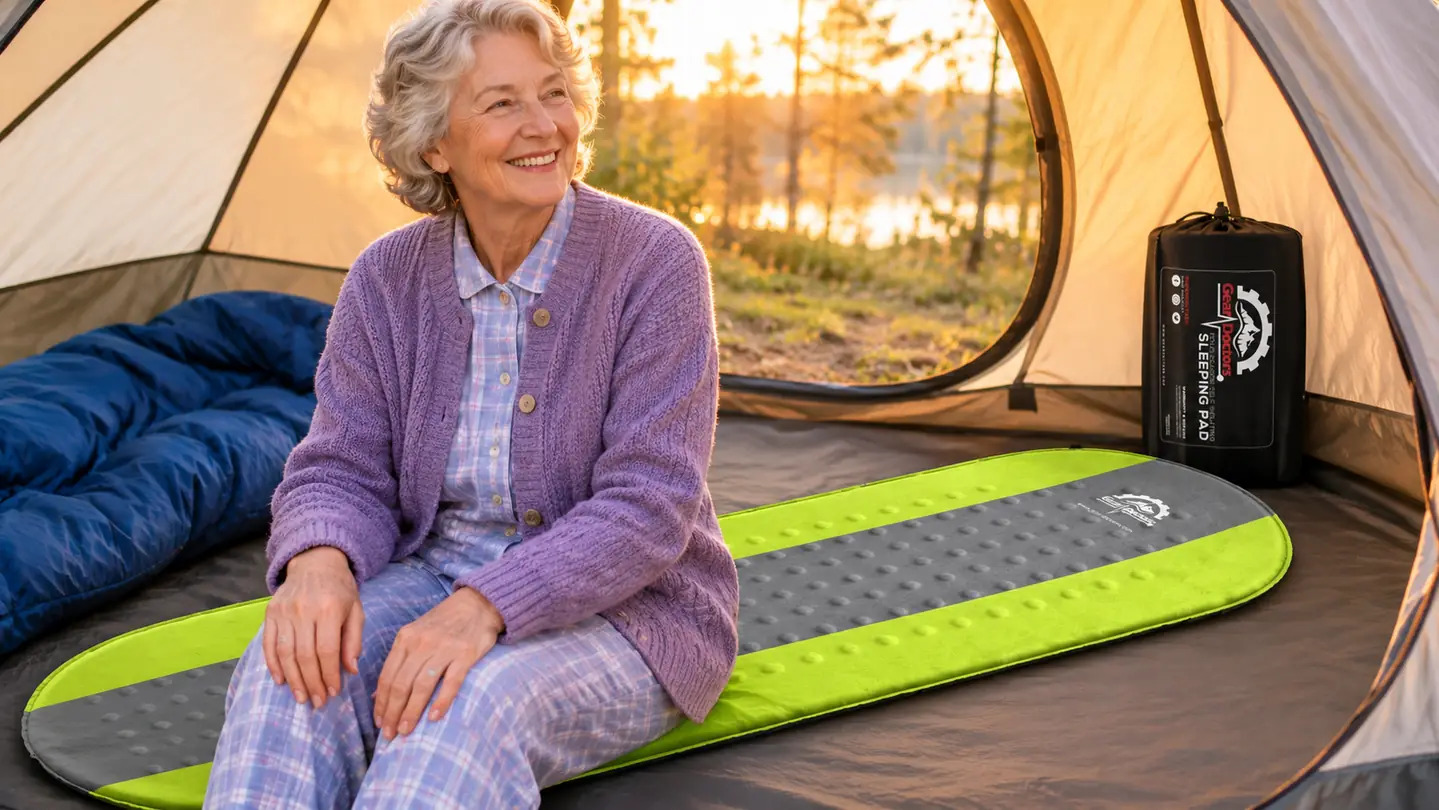
So I ordered the Gear Doctors Oxylus, a self-inflating pad with a 4.3 R-value. Seventy-two inches long, twenty-two wide, an inch and a half thick, 2.2 pounds. It is not a brand I knew. What got my attention was the construction: an air chamber with a foam core inside it, rather than the plain balloon I had tried twice and given up on twice.
The first setup happened on the living room floor, which is where everything gets tested before it is trusted. I unrolled it, opened the valve, and went to put the kettle on. When I came back it had pulled most of its own air. I closed the valve, lay down, and felt it hold. Three minutes, maybe four. The listing says under five minutes from pack to sleep-ready and I believe it, though I would add that a good share of that minute is you standing there being impatient.
What I did not expect was how different an inch and a half around a foam core feels from an inch and a half of plain air. An air pad is a balloon. It holds you up and then you spend the night negotiating with it, chasing the spot where your hip is not touching anything. The Oxylus has something inside that pushes back. I am a side sleeper with a back that files complaints, and I noticed the difference on the first night, in the first ten minutes, before I had any reason to be generous about it.
That first night was a Cascade Lakes campground in late September, the weekend the overnight temperature sat just above freezing. I slept from eleven to six. I woke up because my alarm went off, not because my back had decided the night was over. Dale asked me at breakfast whether I was going to write about this, which is his way of saying he had noticed.
Twenty years of telling myself comfort was a weight I could not afford, undone by an inch and a half of foam and one valve.
Three minutes to a night that does not end at 2:40
The Gear Doctors Oxylus: 4.3 R-value, 72 inches long, 1.5 inches thick, 2.2 pounds, and a foam core that is still doing its job at three in the morning.
Amazon Check Today's Price on Amazon →The real test was three nights in the Three Sisters in October, the trip I would have quietly canceled on a thinner pad. The second night dropped to thirty-one. I had a twenty-degree bag, that pad, and nothing else under me, and the cold never came up through my hip, which is where it always starts. An R-value is a number on a page until you have slept on a thirty-one degree night, and then it is a fact you can feel in your shoulder blade.
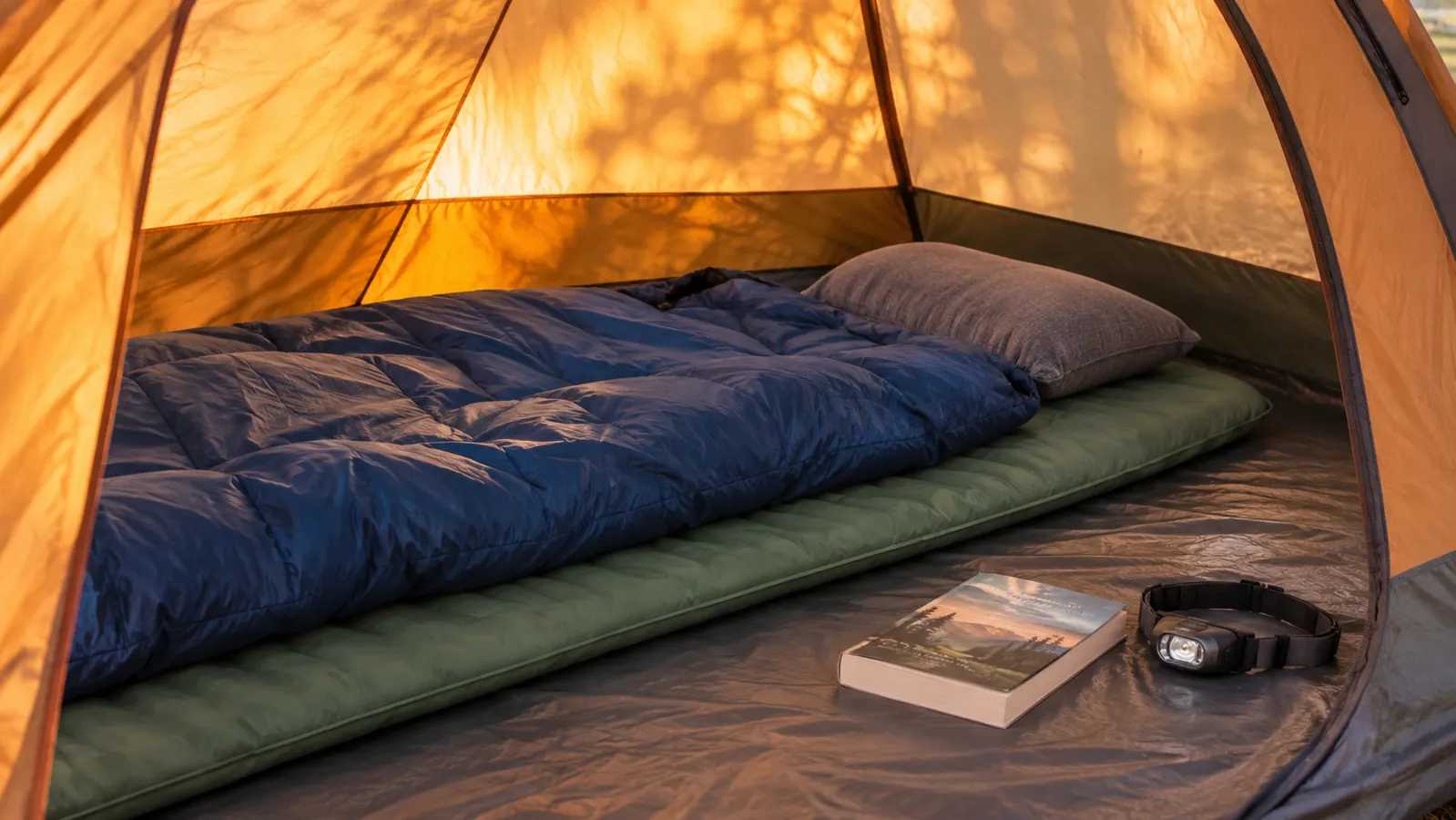
The weight is 2.2 pounds. On a two or three night trip that is a fair trade for me and I have made my peace with it. If you are counting ounces on a long thru-hike, this is not the pad for you and I will not pretend otherwise. If your back has opinions, two pounds of foam and air is the best value in the pack.
Two things I do not love. First, an inch and a half is an inch and a half, and if you are a large person who sleeps on your side, that may not be enough. Dale is six foot one and nearer the 250 pound limit than he would like me to print, and he was fine, but he is also a back sleeper who could sleep on a picnic table. Second, a self-inflating pad does not pack down as small as a pure air pad. It takes up real room, and on the tightest pack of the year I notice it.
I have one habit that helps and it is a habit, not a rule. Between trips I store mine unrolled on the garage floor with the valve open, then roll it from the foot end so the air pushes out ahead of the roll. Three seasons in, it still inflates the way it did that first afternoon on the living room rug.
Dale's verdict, when I asked him straight out: it is not as soft as the mattress at home and it is not supposed to be. He has slept on it four nights now and has not complained once, which for him is a ringing endorsement, and he is the reason I stopped carrying a second pad as backup.
What I'd Tell You If We Were Sitting at My Kitchen Table
If we were at my kitchen table with coffee going cold, here is what I would actually say. Do not buy a pad because a review told you to. Buy it because your back told you something at two in the morning, and then give the pad three nights before you decide anything. The first night you will be aware of it the way you are aware of any new pillow. The second night you will sleep. By the third night you will have stopped thinking about the pad at all, and that is the entire job. The Gear Doctors Oxylus did that for me at sixty-one with a bad knee and a worse back, and it cost me less sleep than one more night of pretending I was still twenty-five.
The pad you stop thinking about by the third night
Seventy-two inches long, 22 wide, 1.5 inches thick, 4.3 R-value, 2.2 pounds, with a carry bag and a repair patch in the box. Two trips a year or twenty, it does the same job.
Amazon See It on Amazon →