
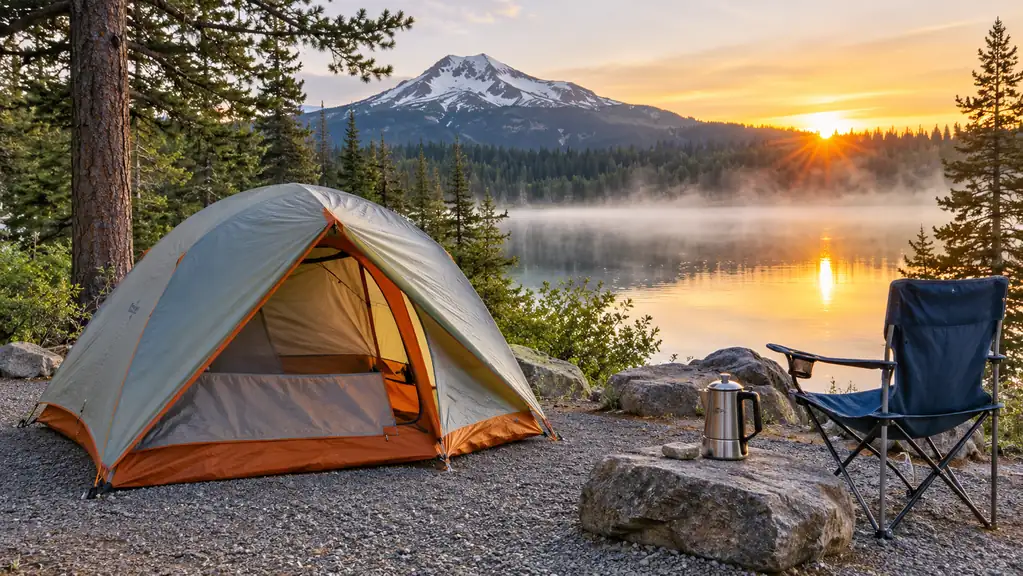
Three nights in the Three Sisters Wilderness taught me more about the Naturehike Cloud-Up 2 than any product page ever could. I learned it on the second night, in a cold drizzle, with a stiff left knee that did not want to kneel and my husband Dale already zipped into his bag and pretending not to watch me wrestle the pole set. The tent is a good buy for a certain kind of camper. It is also a tent with a few habits you should know about before you order one, and most reviews slide right past them. This is the version I would want to read: what it does well, where it quietly asks you to compromise, and who I would and would not hand it to.
I am 61, a retired middle school science teacher, and I camp out of a 2014 Subaru Outback. Summers are car camping at Cascade Lakes. Spring and fall are two or three nights on foot, when the overnight temperature drops close to freezing and my back reminds me that pad thickness is not a luxury. I have slept in this tent about fourteen nights now, in sun, in wind, and in one properly wet storm. Nobody gave me a discount to write this and I am not inclined to be polite about a product that lives in my pack.
The Quick Verdict
A light, honestly built three-season shelter that fits two adults only if those adults are fond of each other. Buy it for the weight and the packed size, not for room to spread out.
Amazon Check Today's Price →4.3 pounds, a 15.7 inch stuff sack, and a footprint in the bag
That is the whole pitch and it is a fair one. The full spec sheet, the footprint bundle, and nearly 2,400 owner reviews are on the listing.
Amazon Check Today's Price on Amazon →What Nobody Tells You Before You Buy It
The floor measures 82.7 inches long by 49.2 inches wide. Read that second number again slowly. Split between two adults it works out to roughly 24 inches each, which is narrower than a twin bed. Dale and I are not big people and we still sleep like two pencils in a drawer. It works. It is not roomy. If you are picturing a tent where you sit up, spread out a hand of cards, and change clothes without elbowing anybody, this is not that tent, and no amount of clever packing will make it into one.
The listing says 4.3 pounds and my kitchen scale agreed within an ounce or two, bag, pole sack, and the five wind ropes included. What the listing does not spell out is how much that figure matters in daily use. A 15.7 by 5.1 by 5.1 inch stuff sack drops into the bottom of my pack beside the food bag and still leaves room for a jacket and the stove. On a two-night trip my load stayed under what my knee tolerates, and that is the entire reason a tent this size earns a permanent place in the rotation rather than a shelf in the garage.
Two things I checked before the first trip, because I have been burned before. I laid both pads out on the living room floor at the spacing the tent allows and sat there looking at them for a while, and I measured the pole bag against the depth of my pack's bottom compartment. Both fit. If the pads had been any thicker I would have been writing a different review, and I would have found that out in my living room instead of on a cold hillside in the dark.
Naturehike calls it a three-season tent, and that label is accurate rather than modest. The shell is 210T polyester with a coating rated past 3000mm, and on the one night it rained hard for four hours, nothing came through the fly and nothing came up through the floor with the included footprint underneath. What the rating does not cover is cold. On a night that dipped to 34 degrees, the inside of the fly was beaded with moisture by morning, because a tent this sealed and this small will always collect the breath of two sleeping people. That is physics, not a defect, and it is the thing I would most want a friend to tell me before I bought one.
How I've Used It
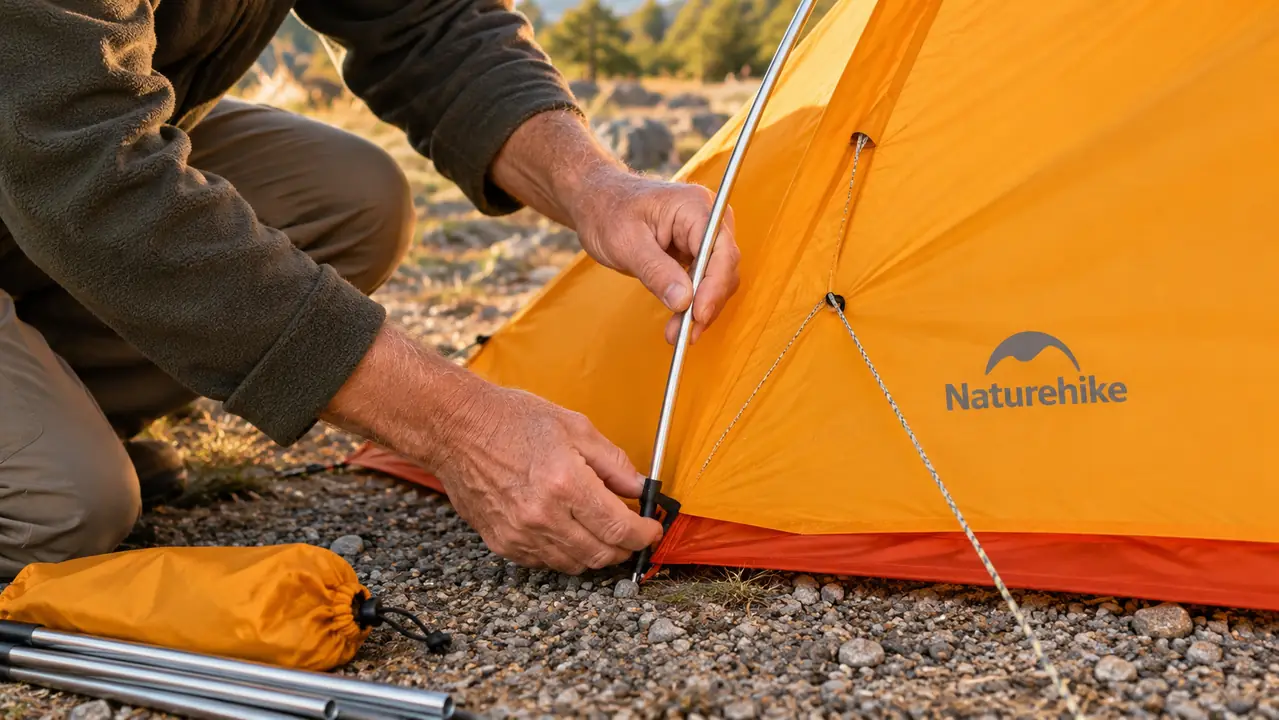
The first trip out was a car camping weekend at a Cascade Lakes campground, and I pitched it on a packed gravel pad where a stake barely bites an inch before it stops. That is where a free standing tent earns its keep. The poles went up, the clips held, and the whole thing stood on its own while I fussed with the footprint underneath. My old tent needed four good stakes before it would hold any shape at all, and that is a small thing I did not expect to appreciate as much as I do now that kneeling on gravel has consequences.
The second trip was three nights in the Three Sisters Wilderness with everything on my back. At 4.3 pounds it is not the lightest shelter on the trail, and it is light enough that I stopped thinking about it by the second mile. Dale carried the food and the stove. I carried the tent and my sleeping pad, which is a thick one because my back has opinions about thin foam. Between the two of us the split came out fair, and the tent was the smaller problem in my pack by a wide margin.
The rain arrived on the second night of that trip, starting around nine and quitting before dawn. I had the fly staked out with the wind ropes and the ventilation window above the front door cracked open a finger's width. Water ran off the fly instead of soaking into it, the seams did not weep, and the floor stayed dry under my pad. What I did get was condensation on the inside of the fly, enough that I wiped it down with a bandana before packing. Normal for a tent this size. Still worth knowing before you commit three nights to one.
I will add one detail the listing cannot tell you. When I pulled the fly taut in that rain, I had one low corner and water pooled there for an hour before I noticed. It eventually found a way in along the seam at the floor line, an ounce or two at most, enough to dampen the corner of my pad. I re-staked that corner higher in the morning and it has not happened since. Now I walk the whole perimeter before I get in and make sure the fly hangs clear of the ground instead of touching it.
Setting It Up and Taking It Down
The poles connect by clips rather than sleeves, which is the version my hands prefer and the reason I can pitch this alone. The pole set goes together, the clips snap on, and the shell takes its shape in one motion. First pitch in my yard took about six minutes with my knee complaining every time I knelt on it. By the end of the season I was doing it in under four, standing up for most of it, which matters a great deal more at 61 than it did at 40.
Five wind ropes came in the bag and I used all five on the exposed night. There are no printed instructions worth the paper they are printed on, so the first pitch was me, the pieces, and a certain amount of muttering. If you have pitched any modern tent you will work it out in one try. If you have not, set it up in the yard before you leave, in daylight, with a cup of coffee and no audience.
One thing I would change is the pole sections. They are short and there are a lot of them, and on the gravel pad I dropped one twice. Losing a section in the dark at a Cascade Lakes campsite would end the trip, so the pole sack lives in the same outside pocket as my headlamp now and I count the sections before I close the car door. That is less a complaint about the tent than a habit it taught me.
Getting it back into the stuff sack is a wrestling match the first three times. The method, and it is patience more than technique, is to fold the fly rather than stuff it and to let the poles go in first against the side. When the fly is wet you have two bad choices: pack it wet and dry it at home, or stand in the rain waiting for it to stop. I pack it wet, hang it over the porch rail the afternoon I get back, and accept the extra five minutes of my life that costs.
What I Liked
- 4.3 pounds shipped weight, with the footprint included in the bag
- Packs to 15.7 by 5.1 by 5.1 inches and drops into the bottom of a pack
- Clip attachment and a free standing frame make solo pitching quick, even with a bad knee
- 3000mm plus coating on the 210T polyester shed four hours of steady rain
- Two-person, three-season coverage at a weight that does not wreck a weekend load
Where It Falls Short
- 49.2 inches of floor width is tight for two average adults, about 24 inches each
- 41.3 inches of peak height means taller campers cannot sit up
- Condensation on the inside of the fly on cold nights, and it drips
- Front entry means climbing over your partner for a middle-of-the-night exit
- A wet fly has to go back into the pack wet and be dried at home
Split between two adults, that 49.2 inch floor works out to about 24 inches each, which is narrower than a twin bed.
Living With It: Condensation, Space, and the Small Annoyances
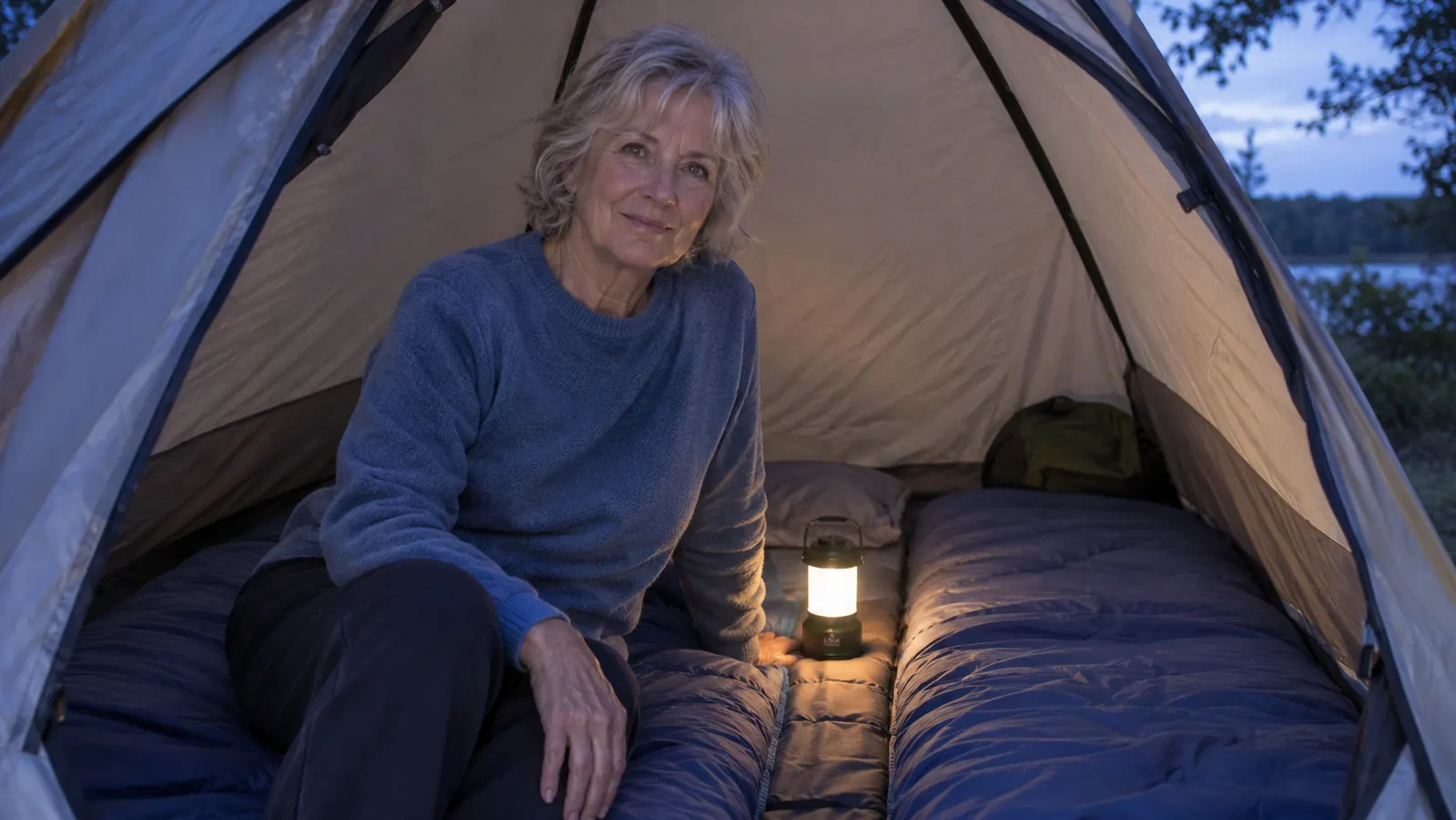
The 41.3 inch peak height is honest about what it is. I can sit up in the middle with a couple of inches to spare. Dale is five eleven and has to lie down to put his socks on, which he mentions every single trip. Two regular pads fit side by side with no gap and no spare room; a wide pad paired with a regular one will press against the walls and pull the fabric tight. Boots go inside the door on the footprint, a headlamp goes in the corner, and that is the whole of the storage picture.
The entry is at the front. Whoever sleeps on the far side has to cross the near side to get out, and at two in the morning that means a knee in somebody's back. We solved it by putting me on the near side, because my knee is the one that demands middle-of-the-night exits. If you are both restless sleepers, plan the sleeping arrangement before you leave the trailhead. This is the single complaint I would lead with if a friend called to ask.
The zipper is fine until you pull it at an angle, at which point it catches the fly fabric and stops. Slow down and it behaves, which is a lesson I relearn roughly once a trip. The fly flaps in wind, and that is not a fault, just a sound you will hear for a while. On the coldest night I woke with a damp footbox from moisture running down the inside of the fly. If I were designing the next version, that is the first thing I would address: more cross ventilation, even at the cost of a few ounces.
September was the worst of it. We camped at a lake in mid-September when the overnight went to 36 degrees, and by five in the morning the inside of the fly looked like the inside of a car window on a cold morning. I keep a microfiber cloth in the tent now and wipe the fly down before I open the door, because opening the door first just shakes the water onto the sleeping bags. Thirty seconds of ritual, and it turns a wet morning into a merely damp one.
Would I Buy It Again?
Yes, and I would buy it for the same reasons. Naturehike built a shelter that weighs 4.3 pounds, packs down to the size of a loaf of bread, includes the footprint, and stands up on its own when the ground refuses to take a stake. For the kind of camping I actually do, a mix of car weekends and two or three nights on foot in shoulder season, those are the four things that matter. Every night I have spent in it, I slept. Every morning I got out of it, the inside was still standing and so was I.
What I would not do is recommend it blind to a couple who are both over six feet and picture themselves reading in bed. That person will be miserable in this tent and will blame me for it. The honest version of the recommendation is narrower: buy this if the trail weight is the point and the living space is a secondary concern. If the living space is the point, spend your weight budget somewhere else and let somebody else carry the difference.
Who This Is For
This is the tent for the backpacker who wants a real shelter with a floor and a fly without carrying five pounds of it, and for the solo camper who likes having room for a map, a book, and a dry change of clothes. It suits couples who are comfortable with each other and who treat a tent as a place to sleep rather than a place to spend a rainy afternoon. It suits three-season use in the Cascades from June through early October, and shoulder-season trips where you have actually looked at the forecast.
It also suits anyone whose knees or back have opinions about wrestling a stubborn tent in the dark. Free standing plus clips forgives a lot of clumsiness. I pitched it alone, in wind, with a bad knee, in under five minutes, and I did not have to call Dale out of his chair to help, which he will tell you is unusual. That is more or less the review in one sentence.
Who Should Skip It
Skip it if you are tall. At 41.3 inches of peak height, anyone over about six feet will spend the whole trip lying down or hunched, and there is no seam you can unzip to fix that. Skip it if you and your partner are broad through the shoulders, because 49.2 inches split two ways is a friendship test. Skip it for winter, since it is a three-season tent and the condensation problem gets worse the colder the nights get, not better.
Skip it if you only ever car camp. You would be carrying 4.3 pounds you do not need to carry and paying for a light tent you could leave standing in the driveway all weekend. A heavier tent with a real vestibule is the better tool when your vehicle is ten feet away. And skip it if condensation is the thing that ruins your mornings, because this tent will fog up on a cold night. That is the trade you make for the weight, and it is a trade nobody should discover at four in the morning.
If the trail weight is the point, this is the tent
A 4.3 pound three-season two-person shelter with the footprint included and a 15.7 inch packed length. Read the current listing and the full spec sheet before you decide.
Amazon Check Today's Price on Amazon →