
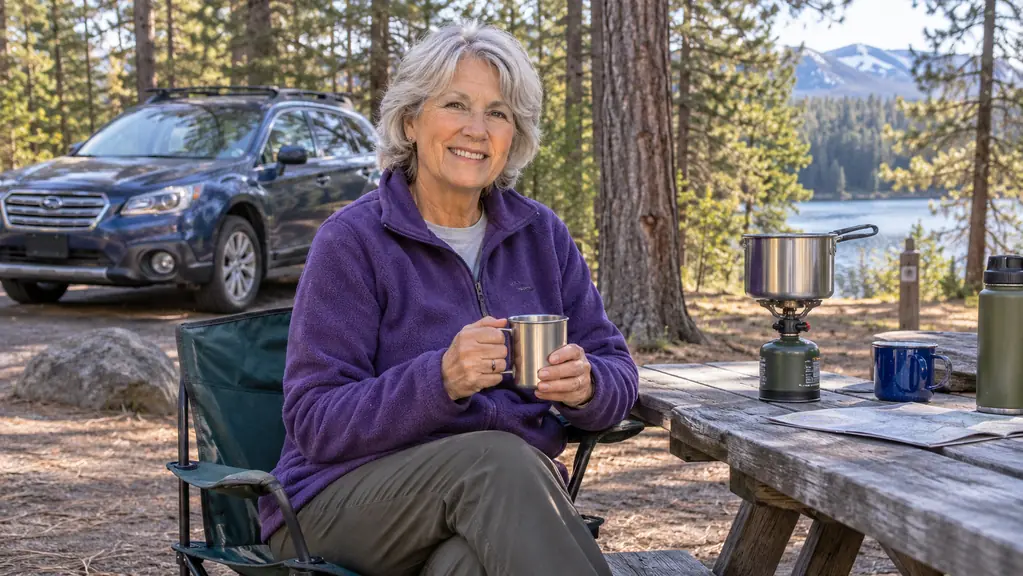
The MSR PocketRocket 2 is the stove I expected to dismiss. I am 61, I live in Bend, Oregon, and I have a left knee that reminds me of every extra ounce I put in a pack. The PocketRocket 2 weighs 2.56 ounces and packs down to roughly 2 by 2 by 3 inches. It has thousands of reviews and a 4.8-star average, which is exactly the kind of reputation that makes me suspicious. So I took it on real trips: car camping at Cascade Lakes and two- and three-night walks in the Three Sisters Wilderness with my husband, Dale. This is what I found after using it for coffee, oatmeal, rice, and one very windy dinner.
I am not going to pretend a stove is a life-changing purchase. What I want from a canister stove is simple: it lights when I am cold and impatient, it boils water without me babysitting it, it simmers without scorching my pot, and it disappears into my pack. The MSR stove does most of that well. It also has a few habits that nobody mentions in the product listing. Those habits are the reason this is an honest review and not a valentine.
The Quick Verdict
A genuinely light and controllable canister stove for one or two people, with wind and canister fuel as the real limits, not the flame.
Amazon Check Today's Price →The stove I keep reaching for on solo mornings
The MSR PocketRocket 2 is light enough to disappear in a pack and controllable enough for real cooking. Check the current listing for the stove and case.
Amazon Check Today's Price on Amazon →How I've Used It
My testing is not lab testing. It is real cooking at real campsites, usually with cold hands. Most of my trips are car camping at Cascade Lakes, where I can pull up in my 2014 Subaru Outback and set up a table, or two- and three-night backpacking trips in the Three Sisters Wilderness. Shoulder seasons are my favorite, and the temperature often drops near freezing at night. Dale comes on most trips. He is a good sport about gear, but he is not a good sport about waiting for coffee.
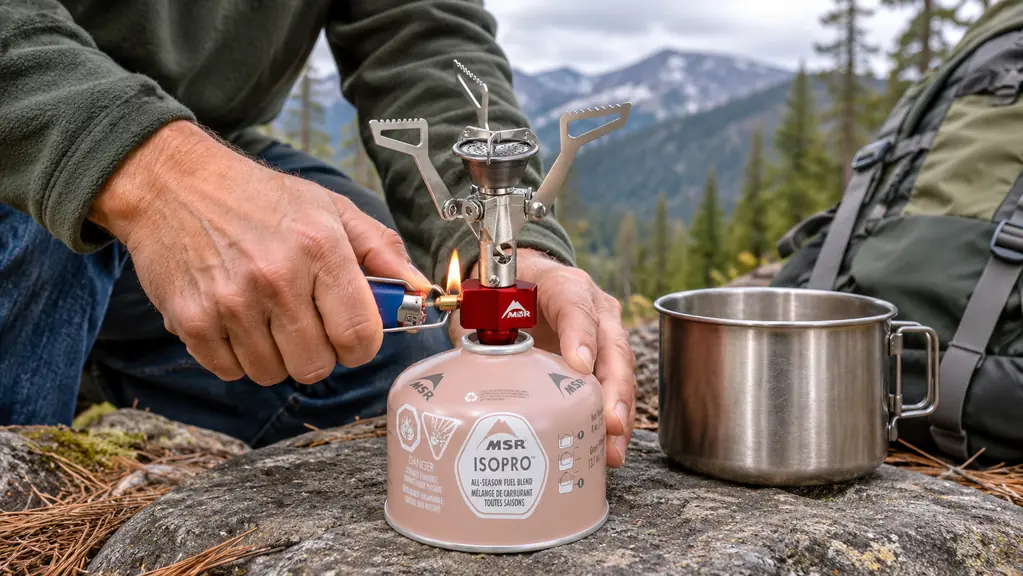
The first thing I do is unpack the hard shell carry case, screw the stove onto a threaded isobutane-propane canister, and set a one-liter aluminum pot on top. The canister is not included, which is normal for this kind of stove but still worth saying. On a calm morning at about 45 degrees, one liter came to a rolling boil in a little over four minutes. The listing says 3.5 minutes, and I believe that number on a warm, windless day. My mornings are rarely warm and windless.
Dale is less interested in specs than I am, but he notices weight. On a three-day trip, 2.56 ounces is not going to save my knee by itself. It does mean I can carry a better sleeping pad, and my back cares about that more than it cares about a fancy stove. The MSR PocketRocket 2 disappears into the cook kit. That is the highest compliment I can give a piece of camp gear.
What the Specs Get Right
The weight and packed size are not marketing math. The stove is 2.56 ounces, and the listed dimensions are 1.7 inches long, 1.3 inches wide, and 3.1 inches high. It folds into a shape that fits inside my one-liter pot with a small lighter and a folded bandana. The aluminum body feels solid enough to toss in a pack, and the hard shell case keeps soot off my sleeping bag. That case is not fancy, but it does its job.
The boil time is real, with conditions. MSR says one liter in 3.5 minutes, and the flame adjusts from a simmer to a rolling boil. I care more about the simmer than the boil. Many small stoves have two settings: off and jet engine. This one lets me hold a low flame long enough to cook rice without burning the bottom of the pot. It is not a kitchen range, and I still stir, but I can make a proper one-pot dinner instead of only boiling water.
The fuel type is isobutane, and the stove uses a self-sealing threaded canister. That means I can unscrew the stove without fuel spraying everywhere, which matters when I am breaking camp in a hurry. The warranty is three years, limited to defects in materials and workmanship. I have not needed it. I mention it because a stove is a small metal object that can develop a problem, and a clear warranty is worth more than a fancy stuff sack.
Where It Surprised Me
I expected it to be a coffee machine. It turned out to be a cooking stove. The flame control is fine enough that I made oatmeal with dried apples without cementing it to the pot. I also made a simple rice and beans dinner on a calm evening, and the stove held a low flame for the whole cook time. That is not a claim I can make for every ultralight canister stove I have tried. The MSR PocketRocket 2 earned a permanent spot in my cook kit because of that control.
The second surprise was how little space it takes up. I keep it in the hard case inside my pot, along with a lighter and a small cloth. When I repack in the morning, there is no puzzle. It goes back in the same place. On a trip where everything is damp and I am tired, a stove that packs the same way every time is worth more than a stove with extra features I do not use.
The third surprise was the boil time in a light breeze. I set the stove behind a rock, which is my usual habit, and it still brought one liter to a boil in about four and a half minutes. That is slower than the listed number, but it is not a failure. A canister stove is a small flame in open air. If you expect it to ignore wind, you will be disappointed. If you give it a little shelter, it does what it says.
What Nobody Tells You
Wind is the whole game with this stove. The flame is small, and a breeze pulls heat away from the pot. On an exposed granite slab above a lake, I have waited much longer than 3.5 minutes for a boil. I now look for a natural windbreak before I even set the pot down. A rock, a pack, or the lee side of the car makes a bigger difference than any technique I know. The stove is not bad in wind. It is simply a small flame, and small flames lose to weather.
Cold canisters are the second thing nobody mentions. In shoulder season, the temperature near freezing makes the fuel pressure drop, and the flame gets lazy. I keep the canister inside my jacket before I cook, and I do not leave it out overnight. This is not a defect in the MSR stove. It is how isobutane behaves. If you mostly camp in cold weather, a different fuel system may suit you better. If you camp in three seasons, this stove is fine once you learn the habit.
The stove is also small enough that a wide pot needs attention. I use a one-liter aluminum pot, which is stable on a level picnic table or a flat rock. A wider, heavier pot on uneven ground makes me nervous, so I keep one hand near the handle until the water is hot. That is not a reason to avoid the stove. It is a reason to use a pot that matches it and to pick a flat spot. Most camp stove accidents are user error, not stove failure.
Fuel is not included. That sounds obvious, but I have watched people unbox a new stove at a campsite and realize they have no canister. The stove uses a threaded isobutane-propane canister, and those are sold separately. I now keep a spare in the car for car camping and a small one in the pack for overnights. The hard shell case holds the stove, not a canister, so you need to plan for that in your cook kit.
The case is snug. That is good for protection and annoying when I am wearing gloves. I have also found that a damp cloth left inside the case will stay damp, so I air both out at home. These are small things. They are also the kind of small things that decide whether a stove feels pleasant on day three or merely acceptable. The MSR PocketRocket 2 is pleasant, but it is not magical.
The Annoyances I Live With
It is a one- or two-person stove. If four people want coffee at the same time, you will be boiling in rounds. The listed boil time is for one liter, and one liter is about two large mugs. That is fine for Dale and me. It is not fine for a group. I have used it for a family breakfast once, and I spent more time refilling the pot than eating. Now I bring a larger stove for group trips.
The flame is concentrated, so I have to stir anything thicker than soup. This is not a flaw in the stove so much as a fact about small flames. I use a pot with a thick bottom and keep the flame low. I also accept that the stove is for simple meals, not for a three-course dinner. If you want to cook elaborate food at camp, a bigger stove with a broader flame will make your life easier.
The stove does not come with fuel, and it does not come with a windscreen. I use a natural windbreak instead of adding gear. I also carry a lighter, because I do not want to depend on a match in the rain. These are small supplies, but they are part of the real weight of the system. The stove is 2.56 ounces. The cook kit around it is more.

The Small Habits That Make It Better
I measure water instead of filling the pot to the brim. One liter is the listed boil amount, and a full pot takes longer and is harder to handle. I also start with water that has been filtered and kept in the car or pack, not icy stream water. These are not stove features. They are habits that make a small stove feel more capable. The MSR PocketRocket 2 rewards them.
I set up the stove before I am hungry. That sounds silly, but a stove is a tool that asks for a little patience. I fill the pot, find a windbreak, check the canister, and set out the coffee before I light it. By the time the water boils, I am not fumbling. The stove has no magic. It has a good flame and a small package. The rest is the cook.
How It Has Held Up
After a full season of weekend trips, the folding mechanism and the flame adjustment still move freely. The aluminum body has a few scratches, which I expect. I wipe it down at home and store it dry. I have not had a clog, a leak, or a flame that would not adjust. The hard shell case has a crack near the closing edge, but it still closes. That is the only wear item so far, and it is cosmetic.
I am careful with the threads on the canister connection. Cross-threading is the fastest way to ruin a stove, and it is easy to do in the dark. I set the stove on a flat surface, start the threads by hand, and only then snug it down. That habit has served me well. If you treat the connection with a little respect, the stove should last. The three-year warranty is a backup, not a plan.
Who This Is For
This stove is for the solo camper or the couple who wants hot coffee and simple meals without carrying a heavy stove. It is for the backpacker who counts ounces but still wants a simmer. It is for the car camper who wants a small backup stove in the bin. It is also for the person who has a stiff knee or a finicky back and would rather spend weight on a better pad than on a stove. The MSR PocketRocket 2 fits that person well.
Who Should Skip It
Skip it if you regularly cook for four or more people. Skip it if you camp in deep cold and want a stove that does not care about canister pressure. Skip it if you want an all-in-one system with a built-in pot and a windscreen. Skip it if you refuse to carry a separate lighter or matches. The MSR stove is a simple tool, and simple tools ask you to pay attention. That is a fair trade for some people and a bad trade for others.
On a calm morning it is a two-ounce stove that acts like a full kitchen. In wind, it is a two-ounce stove that needs a rock for a partner.
What I Liked
- Weighs 2.56 ounces and packs to about 2 by 2 by 3 inches
- Simmers and boils with useful flame control
- Boils one liter in about 3.5 minutes in calm conditions
- Hard shell case keeps soot off other gear
- Three-year limited warranty
- Simple to set up and pack
Where It Falls Short
- Fuel canister is not included
- Wind slows it down and requires a natural shelter
- Cold canisters lose pressure
- Small for groups of three or more
- Case is snug with gloves and can trap dampness
- Wide pots need a level spot
A small stove that earns its place
The MSR PocketRocket 2 is the stove I keep in my cook kit for solo trips and shoulder-season mornings. Check the current listing before your next trip.
Amazon Check Today's Price on Amazon →